
Modelling the Key Challenges for Adoption of Carpooling in the Indian Capital Megacity of Delhi
Abdullah Furqan
*
 and Ayesha Farooq
1
Department of Business Administration,
Faculty of Management Studies and Research,
Aligarh Muslim University,
Aligarh,
Uttar Pradesh
India
Copy the following to cite this article:
Furqan A, Farooq A. Modelling the Key Challenges for Adoption of Carpooling in the Indian Capital Megacity of Delhi. Curr World Environ 2026;21(2).
Copy the following to cite this URL:
Furqan A, Farooq A. Modelling the Key Challenges for Adoption of Carpooling in the Indian Capital Megacity of Delhi. Curr World Environ 2026;21(2).
Citation Manager Publish History

Introduction
Transportation remains a major pillar for the growth and development of any country. As the economies develop and prosper, the demand for travel also increases proportionately, as has been the case for most of the developing countries.1Such a rise in the transportation needs of the developing countries has led to a range of problems for them and has caused immense pressure on health and the environment through the release of air pollutants and greenhouse gas emissions from the vehicles.2 In developing countries like India, the economic growth has made the private ownership of vehicles by a large fraction of the population possible. As a result, the transportation in urban areas of India is characterized by extreme levels of traffic congestion, environmental pollution, excessive noise, and other such inconveniences. Even though the aspect of car ownership by a large section of the population is usually a symbol of prosperity, the negative externalities associated with it pose a daunting challenge, especially for the well-being of the environment, and framing sustainable transport policies has become a major issue for governments around the world.3Such inefficiencies associated with private commutation on a large scale and the sorry state of the environment have forced people to look for better alternatives.
As a result of the growing awareness, shared mobility is an option that has been increasingly considered by commuters over the past few years. In India, such a variant of shared mobility called Carpooling is fast becoming popular and is expected to grow exponentially at a CAGR of 19.88% and to a market size of 219 billion dollars between the years 2018 and 2025.4Carpooling is nothing but a ride-sharing arrangement between people having common travel destinations or those in close proximity to one another.5 Such an arrangement offers a viable and sustainable solution to the severe problems of traffic congestion and environmental pollution faced in India. It presents a promising strategy to counter these issues by simply reducing the vehicles on the road substantially.
Carpooling has witnessed considerable success in several European countries, supported by strong institutional frameworks, high levels of digital trust, and favourable cultural attitudes toward shared mobility. Policy interventions such as dedicated high-occupancy vehicle (HOV) lanes, financial incentives, and integration with public transport systems have further accelerated adoption.6,7 In contrast, the Indian context presents a distinct set of challenges. Higher perceived safety risks, concerns regarding privacy, socio-cultural reservations, and limited regulatory support have constrained the scalability of carpooling initiatives. These contextual differences highlight that solutions successful in Europe cannot be directly transplanted to Indian cities without accounting for local socio-technical dynamics. Despite its environmental and economic promise, adoption remains considerably low in India, particularly in its capital, Delhi. A stated-preference survey across Indian cities identified two pivotal attitudinal dimensions: a time–convenience factor (extra time taken to travel, walking to common points, wait time delays) that hinders participation, and a private–public cost element (fuel savings, toll/shared cost) that encourages it.5Similar behavioural insights are supported in Ahmedabad, where non-users attributed their reluctance to inflexible timing, loss of route freedom, privacy concerns, and demands for punctuality.8Recent India-specific research on Generation Z using structural equation modelling further highlights that perceived behavioural control, attitude toward carpooling, and trust propensity significantly influence carpooling intention.9
At this stage, it becomes essential to acknowledge the structural effect of the recent pandemic (COVID-19) on shared mobility systems. It led to a significant decline in ride-sharing adoption due to heightened concerns regarding hygiene, personal safety, and interaction with strangers. These shifts have had lasting behavioural implications, reinforcing risk perceptions and trust deficits among commuters. But at the same time, the post-pandemic recovery phase has renewed interest in cost-efficient and sustainable mobility solutions, creating a paradoxical environment where carpooling is both more necessary and more resisted. This duality further justifies the need to systematically examine the underlying barriers to adoption.10-12
While the option of carpooling is increasingly gaining popularity, especially among the daily office commuters, its adoption remains varied across different categories of people and is dependent on their multitude of concerns and expectations.4 From a policy standpoint, Delhi’s regulatory environment adds complexity: carpooling occupies a grey legal zone under India’s Motor Vehicles framework, with no explicit recognition or standardized guidelines. This legal ambiguity hampers investor interest and limits scaling potential.13
Against this backdrop, the present study seeks to systematically examine the key challenges affecting carpooling adoption in Delhi through the integrated application of the robust techniques of Interpretive Structural Modelling (ISM) and MICMAC analysis.
The specific objectives of the study are as follows:
To identify the major barriers obstructing the large-scale adoption of carpooling in Delhi through an extensive review of literature and expert opinion.
To analyze the contextual relationships between the identified challenges using Interpretive Structural Modelling.
To develop a hierarchical structural model that explains the driving and dependent nature of the barriers affecting carpooling adoption.
To classify the challenges based on their driving power and dependence using MICMAC analysis.
To propose a policy-oriented and actionable implementation roadmap for government agencies, mobility platforms, and urban stakeholders to promote sustainable carpooling adoption in Delhi.
To provide insights for future shared mobility research and policy formulation in the context of emerging urban economies.
The study aims to contribute both theoretically and practically by offering a structured understanding of the systemic challenges associated with carpooling adoption and by informing evidence-based urban mobility interventions.
Theoretical Framework
The adoption of carpooling can be understood through established behavioural frameworks including the likes of Theory of Planned Behaviour (TPB) and the Technology Acceptance Model (TAM). TPB suggests that individuals’ intention to engage in carpooling is shaped by their attitudes (e.g., safety perceptions), subjective norms (e.g., societal acceptance), and perceived behavioural control (e.g., technological capability). Similarly, TAM emphasizes the role of perceived usefulness and ease of use in influencing the adoption of technology-enabled ride-sharing platforms. Barriers such as lack of technological savvy, trust deficits, and privacy concerns can thus be interpreted as constraints on perceived ease of use and behavioural control.14-15
By integrating these theoretical perspectives, the present study not only identifies key barriers but also situates them within a broader behavioural framework, thereby enhancing the explanatory power of the analysis.
Literature Review
Carpooling as a Sustainable Mobility Solution
Carpooling or ride-sharing has gained prominence globally as a cost-effective and environmentally friendly commuting option. Studies in Europe and North America highlight its role in reducing travel costs, fuel consumption, and carbon emissions.16,17 However, adoption remains context-specific, shaped by socio-cultural, technological, and institutional factors.18 In India, the concept is gradually gaining attention, though largely confined to niche segments such as corporate professionals and university students.19
Challenges to Carpooling Adoption
In Indian cities, the concerns and skepticism regarding carpooling is based on some general challenges of carpooling as well as some factors which are specific to the region. Various studies and experts (as shown in Table 1) have highlighted the major challenges that hinder the large-scale adoption of Carpooling as a mode of sustainable transportation. These barriers are mostly linked to the inconsistent schedules, societal attitudes and fears, technological or infrastructural shortcomings, and regulatory limitations.
Table 1: ProminentSet of Challenges for Carpooling in India
Challenge | Description | Supported literature |
Inconsistent travel/time schedules (ITS) | The travel plans and timings of the parties involved in carpooling do not match or are not flexible. | 20 21 22 5 8 |
Invasion of Privacy and Comfort (IPC) | Sharing of ride with others including strangers takes away comfort of personal space associated with riding solo or with known acquaintances. | 22 23 24 8 |
Danger and fear of Safety(DFS) | There is always a sense of uncertainty and fear of the unknown attached with travelling with strangers or people whom one do not know well enough. | 22 25 26 |
Trust and Data sharing issues (TDSI) | The requirement of sharing personal information and travel itinerary often through internet based mediums with people, for the purpose of carpooling, often creates issues of trust and data privacy. | 27 28 25 |
Lack of Awarenessand Interest (LOAI) | Since the concept of carpooling is at a very nascent stage in India, people in general are not yet aware about its presence, platforms, and how to avail it. They also lack the interest for car sharing. | 9 |
Lack of technological savvy (LTS) | The people lack the technological know-how and will to access internet based apps and platforms to book or avail shared ride with others. | 26 |
Societal norms and cultural resistance (SNCR) | It is considered a taboo to travel with strangers especially in a country like India given the state of the crimes and mishappenings reported. There are some cultural norms at play as well. | 26 29 |
Lack of Government Support (LOGS) | Although considerably beneficial to the environment and public health, Carpooling has not been adequately promoted and supported by the government in India. | 13 |
Source: Authors own work
Research Gap and Contribution
While multiple studies identify individual barriers, there remains a paucity of research mapping hierarchical relationships between them in the context of Indian cities. ISM coupled with MICMAC analysis, offers a methodological foundation to model interdependencies30 among barriers and to classify them by driver power and dependence.
This study applies ISM–MICMAC to the key barriers to carpooling adoption in Delhi, bridging the gap between descriptive disruption and structural understanding—thus providing actionable insights for policymakers, platform designers, and traffic managers.
Materials and Methods
Research Setting
When we talk about pollution, a total of 22 of the world’s 30 most polluted cities are in India.31 The megacity Delhi, the capital of India, designated as National Capital Territory (NCT) region, ranks second in this list and has also been ranked the most polluted capital city in the world for consecutive years.32 Emissions from vehicles in the city account for almost 50 % of its air pollution. With high density and suburban sprawl, commuter distances have increased, accelerating reliance on private vehicles.33 Vehicle growth in Delhi is among the fastest in the world: approximately 7.9 million registered vehicles as of 2024, with an addition of 0.65 million vehicles during 2023–24 alone—of which 90% are two-wheelers or private cars. Daily, about 1.1 million vehicles enter and exit the city, contributing heavily to congestion and emissions.34 The city routinely breaches both national (NAAQS) and WHO air quality standards; the average PM2.5 in early 2025 was around 87 ug/m³, more than twice the national standard of 40 ug/m³, and far above WHO guidelines.35
Delhi currently faces a "mobility crisis" marked by inadequate public transport infrastructure, high waiting times, and falling bus ridership. With only 45 buses per lakh population, far below the benchmark of 60 buses per lakh, and less than 1% of bus stops offering wait times under 10 minutes, public transit remains unreliable for many commuters.36 Various policy measures like the odd–even scheme during winter have led to temporary reductions in PM2.5 (20%) and rising average vehicle speed (5%), often coinciding with expanded carpooling activity via platforms such as UberCommute, BlaBla, and “Poochh-O” Carpool. Yet barriers, especially safety, trust, and regulatory ambiguity have hindered lasting adoption across Delhi’s commuter base.13 Given the city's extreme pollution, resulting health hazards, dense population, and congested roadways, Delhi offers a critical real-world setting to assess impediments to carpooling as a scalable demand-management and air-quality intervention.
Research Design
This study adopts an exploratory and interpretive research design to identify, structure, and prioritize the systemic challenges obstructing the large-scale adoption of carpooling in Delhi, India. Since these challenges are interdependent, a purely statistical approach would be insufficient to capture their complexity. Therefore, Interpretive Structural Modelling was employed in order to map the hierarchical relationships between the barriers, followed by MICMAC analysis to validate the driving and dependence powers of each challenge.
Identification of Key Challenges
The study relied on a combination of extensive literature review and expert elicitation to identify and validate the challenges.
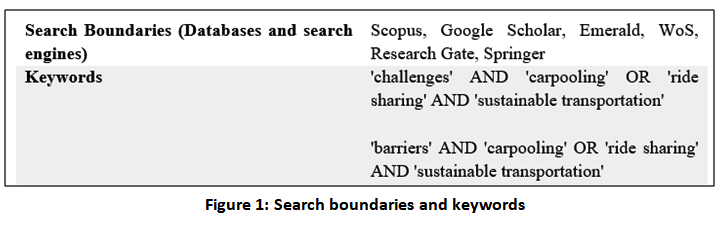
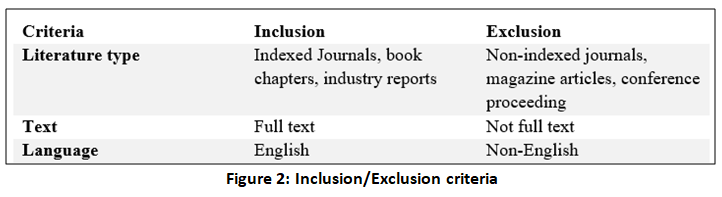
Literature review: The initial pool of key challenges was generated through systematic literature review (SLR) applied on peer-reviewed journals and reports. The adopted search strategy for the review along with the inclusion and exclusion criteria is shown in the Figure (1 and 2) below.
 | Figure 1: Search boundaries and keywords
|
Source: Authors
 | Figure 2: Inclusion/Exclusion criteria
|
Source: Authors
Expert validation: A purposive sampling strategy was adopted to engage 12 domain experts (profiles shown in Table 2). While the number of experts in ISM studies in general is typically limited, the emphasis is placed on quality, diversity, and domain relevance of the panel rather than statistical representativeness. In line with prior ISM research, the study engaged 12 domain experts, representing academia, industry, government, and end users, to ensure a balanced and comprehensive perspective. Not only this, other safeguards such as taking anonymized responses to minimize conformity and dominance effects, majority-rulefor accepting relationships in the SSIM matrix, triangulation with literature, and validation through MICMAC analysis have been adopted to mitigate potential bias.
Table 2: Profile of Domain Experts
Expert Category | Expert Code | Designation / Role | Area of Expertise / Experience | Relevance to Study |
Academician | AE1 | Professor, Transportation Planning | 18+ years research in urban mobility, travel behaviour, sustainable transport | Insights on systemic mobility barriers and shared transport models |
AE2 | Professor, Sustainable Urban Transport | Smart mobility, multimodal integration, govt.-funded mobility projects | Understanding integration of carpooling in urban transport systems | |
AE3 | Assistant Professor, Operations & SCM | Ride-sharing optimization, ISM/DEMATEL modelling | Methodological expertise and platform-based mobility insights | |
AE4 | Researcher, Urban Studies | Gendered safety, socio-cultural mobility behaviour | Cultural and safety perceptions affecting carpooling adoption | |
Industry Practitioner (BlaBlaCar) | IE1 | City Operations Manager | User onboarding, ride-matching challenges, safety compliance | Practical barriers in real-world ride-sharing operations |
IE2 | Product Manager | Trust features, platform design, privacy controls | Technological and privacy-related adoption issues | |
IE3 | Data Analytics Lead | Ride pattern analysis, user behaviour modelling | Scheduling and matching efficiency challenges | |
IE4 | Safety & Community Specialist | Awareness programs, grievance handling, user trust | Addressing fear and safety perceptions among users | |
Government Official | GE1 | Senior Transport Planner, Delhi Govt. | Sustainable mobility policies, congestion management | Role of policy and regulatory support for carpooling |
GE2 | Urban Mobility Consultant (Smart City) | Multimodal transport integration, shared mobility planning | Institutional support and infrastructure alignment | |
Daily Commuter | CE1 | IT Professional, NCR | 25 km daily commute, prior informal carpool experience | User-level safety and scheduling concerns |
CE2 | Banking Professional, West Delhi | 18 km daily commute by private vehicle | Privacy, comfort, and trust-related barriers |
Source: Authors own work
These experts confirmed the relevance of the identified challenges and refined the list to include eight critical barriers: Danger and Fear of Safety (DFS), Invasion of Privacy and Comfort (IPC), Trust and Data Sharing Issues (TDSI), Lack of Awareness and Interest (LOAI), Lack of Technological Savvy (LTS), Societal Norms and Cultural Resistance (SNCR), Lack of Government Support (LOGS), and Inconsistent Travel Schedules (ITS).
Interpretive Structural Modelling (ISM)
ISM was incorporated to capture the hierarchical relationships between the identified challenges. The process followed these systematic steps as recommended by Warfield (1974):
Identification of challenges: Finalized from literature and expert feedback (Table 1).
Structural Self-Interaction Matrix (SSIM): Experts evaluated the relationships among challenges in a pairwise manner using the symbols V, A, X, O to denote directional influence. SSIM presents the relationship between the elements based on the direction of influence of each relation, while the pair-wise evaluations of the elements are being made. It checks four things:i) whether element I influences or has an effect onelement J, ii) whether element J has an effect or influences element I, iii) whether elements I and J influence each other, and iv) whether there is no relation between elements I and J. This is assessed by the experts through a consensus majority vote, taking two elements or factors at a time and making pairwise comparisons to denote the above mentioned relationship with symbols V, A, X, and O, respectively. The final SSIM developed for this study is presented in Table 3.
Table 3: Final SSIM
LOGS | SNCR | LTS | LOAI | TDSI | DFS | IPC | ITS | |
ITS | O | A | A | A | O | A | O | X |
IPC | A | V | A | A | A | A | X | |
DFS | A | X | V | V | X | X | ||
TDSI | X | A | V | X | X | |||
LOAI | X | A | X | X | ||||
LTS | O | A | X | |||||
SNCR | V | X | ||||||
LOGS | X |
Source: Authors own work
Reachability Matrix: The SSIM was transformed into an Initial Reachability Matrix, also known as binary matrix,37following the rules mentioned in Table 4. The resultant IRM is shown in Table 5. Subsequently, it was checked for transitivity to generate Final Reachability Matrix (Table 6) and derive logical conformity. Transitivity is an essential precondition for ISM. As per this assumption, if Element I is affects or is affect by J and J is related to K, it implies that I is also related to K. This helps to uncover the indirect relationships between the elements and remove any bias.38 The transitive values are denoted by starred values in FRM.
Table 4: IRM Conversion rules
(Row Element i, Column Element j) in SSIM | (Row Element i, Column Element j) in IRM | (Row Element j, Column Element i) in IRM |
V | 1 | 0 |
A | 0 | 1 |
X | 1 | 1 |
O | 0 | 0 |
Source: Authors own work
Table 5: IRM
ITS | IPC | DFS | TDSI | LOAI | LTS | SNCR | LOGS | Driving Power | |
ITS | 1 | 0 | 0 | 0 | 0 | 0 | 0 | 0 | 1 |
IPC | 0 | 1 | 0 | 0 | 0 | 0 | 1 | 0 | 2 |
DFS | 1 | 1 | 1 | 1 | 1 | 1 | 1 | 0 | 7 |
TDSI | 0 | 1 | 1 | 1 | 1 | 1 | 0 | 1 | 6 |
LOAI | 1 | 1 | 0 | 1 | 1 | 1 | 0 | 1 | 6 |
LTS | 1 | 1 | 0 | 0 | 1 | 1 | 0 | 0 | 4 |
SNCR | 1 | 0 | 1 | 1 | 1 | 1 | 1 | 1 | 7 |
LOGS | 0 | 1 | 1 | 1 | 1 | 0 | 0 | 1 | 5 |
Dependence Power | 5 | 6 | 4 | 5 | 6 | 5 | 3 | 4 |
Source: Authors own work
Table 6: FRM
ITS | IPC | DFS | TDSI | LOAI | LTS | SNCR | LOGS | Driving Power | |
ITS | 1 | 0 | 0 | 0 | 0 | 0 | 0 | 0 | 1 |
IPC | 1* | 1 | 1* | 1* | 1* | 1* | 1 | 1* | 8 |
DFS | 1 | 1 | 1 | 1 | 1 | 1 | 1 | 1* | 8 |
TDSI | 1* | 1 | 1 | 1 | 1 | 1 | 1* | 1 | 8 |
LOAI | 1 | 1 | 1* | 1 | 1 | 1 | 1* | 1 | 8 |
LTS | 1 | 1 | 0 | 1* | 1 | 1 | 1* | 1* | 7 |
SNCR | 1 | 1* | 1 | 1 | 1 | 1 | 1 | 1 | 8 |
LOGS | 1* | 1 | 1 | 1 | 1 | 1* | 1* | 1 | 8 |
Dependence Power | 8 | 7 | 6 | 7 | 7 | 7 | 7 | 7 |
Source: Authors own work
Level Partitioning: In this step, the reachability and antecedent sets were analysed iteratively to establish a multi-level hierarchical model known as level partitioning. It involves the classification of the elements or challenges under study into ‘reachability’, ‘antecedent’, and ‘intersection’ sets. The reachability set contains those elements (challenges of carpooling) in the row of a particular element, including itself, with which there exists a relationship in the FRM (Final Reachability Matrix). Similarly, the antecedent set for an element contains those elements in the column of a particular element, including itself with which there exists a relationship in the FRM. The intersection set contains the common elements that occur in both reachability and antecedent sets. The challenge(s) for which the reachability set is identical to the intersection set are assigned level 1. As a next step, all the elements falling under level 1 are removed from consideration, and the process goes on repeating till classification of all challenges in levels or partitions is completed. The level partitioning done for this study is shown in Table 7.
Table 7: Partitioning of Levels
Challenge | Reachability Set | Antecedent Set | Intersection set | Level Partition |
ITS (1) | 1 | 1,2,3,4,5,6,7,8 | 1 | I |
IPC (2) | 1,2,3,4,5,6,7,8 | 2,3,4,5,6,7,8 | 2,3,4,5,6,7,8 | II |
DFS (3) | 1,2,3,4,5,6,7,8 | 2,3,4,5,7,8 | 2,3,4,5,7,8 | III |
TDSI (4) | 1,2,3,4,5,6,7,8 | 2,3,4,5,6,7,8 | 2,3,4,5,6,7,8 | II |
LOAI (5) | 1,2,3,4,5,6,7,8 | 2,3,4,5,6,7,8 | 2,3,4,5,6,7,8 | II |
LTS (6) | 1,2,4,5,6,7,8 | 2,3,4,5,6,7,8 | 2, 4,5,6,7,8 | II |
SNCR (7) | 1,2,3,4,5,6,7,8 | 2,3,4,5,6,7,8 | 2,3,4,5,6,7,8 | II |
LOGS (8) | 1,2,3,4,5,6,7,8 | 2,3,4,5,6,7,8 | 2,3,4,5,6,7,8 | II |
Source: Authors own work
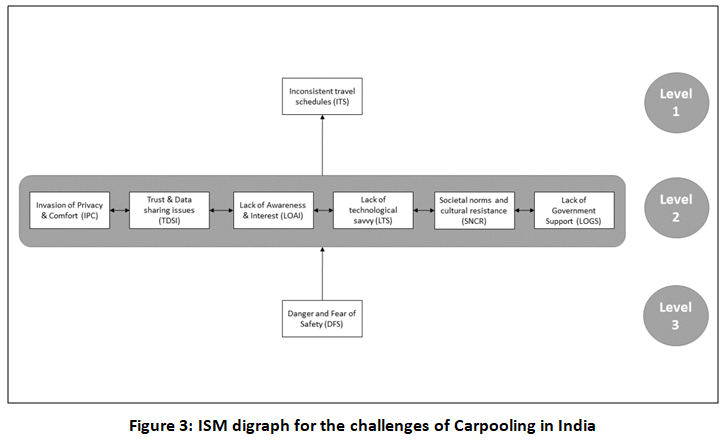
ISM Digraph: The final hierarchical structure in the form of a digraph was developed to depict the driving and dependence relationships across levels generated at the stage of level partitioning. In this digraph, the challenges that occurred at level 1 were put at the top end of the digraph and so on. The symbol of Arrow was used to graphically indicate the direction of the relationship among the challenges of carpooling in India. The resulting ISM model of this study is shown in Figure 3. The challenges at level 1 are the ones having a high dependence on other challenges, the ones at level 3 are highly driving or influencing all other challenges, while the challenges at level 2 provide a bridge between the top and bottom-level challenges.
 | Figure 3: ISM digraph for the challenges of Carpooling in India
|
Source: Authors own work
This systemic method of ISM was chosen because it is particularly effective in dealing with complex and interrelated barriers in socio-technical systems, such as shared mobility.
MICMAC Analysis
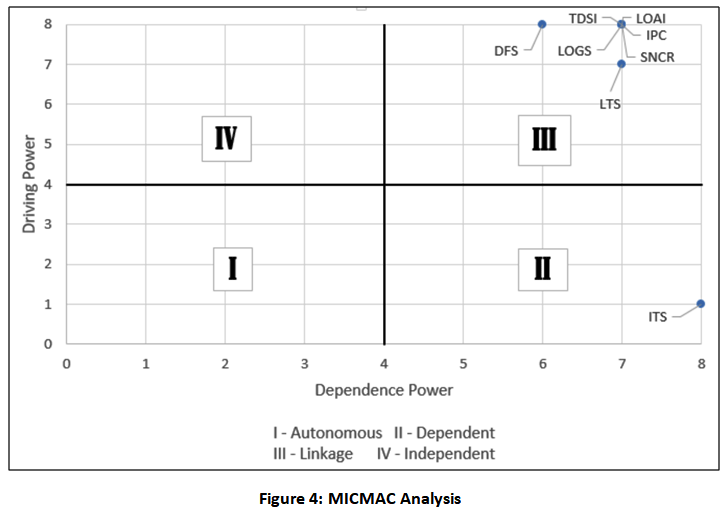
To classify and confirm the ISM results, MICMAC analysis was conducted using the dependence and driving power of each challenge obtained from the FRM. MICMAC analysis classified the above challenges by putting them in4 quadrants, namely ‘Autonomous’, ‘Dependent’, ‘Linkage’, and ‘Independent’, on the basis of their driving and dependence.39 on each other (Figure 4).Autonomous quadrant (I) contains elements with a low driving and dependence power. Dependent Quadrant (II) exhibits challenges with high dependence but low driving power. Linkage Quadrant (III) displays challenges with both high dependence and driving influence on other elements under study. Last, the Independent quadrant (IV) showcases the elements with high driving but low dependence on others.
 | Figure 4: MICMAC Analysis
|
Source: Authors own work
This classification confirmed the robustness of the ISM hierarchy and highlighted the relative systemic importance of each challenge. In particular, DFS emerged as the most critical driving factor, while ITS was found to be the sole factor in the dependent cluster, aligning with the hierarchical structure.
Reliability and Validity Measures
Triangulation: The integration of literature review, expert input, ISM, and MICMAC provided methodological triangulation.
Expert consensus: Iterative rounds of consultation ensured consistency and reduced subjectivity in expert judgments.
Validation through MICMAC: The independent use of MICMAC provided confirmatory evidence for the ISM results, thereby strengthening the reliability of the findings.
Results
The findings from the ISM and MICMAC analysis reveal a hierarchy of interdependent relationships between the challenges that are obstructing the large-scale adoption of carpooling. The translation of these challenges in the form of a level-based hierarchical structure also provides the basis for devising a strategy for addressing these challenges in order of their relative priority.
The ISM results show that the psychological sense of danger and fear of safety (DFS) while opting for Carpooling is the most prominent challenge facing its large-scale adoption in India. This fear needs to be addressed in the immediate future as such anxiety related to carpooling is amplifying or driving all other challenges related to it as shown in the ISM digraph. At the next level, challenges related to Invasion of privacy and comfort (IPC), Trust and data sharing issues (TDSI), Lack of awareness and interest (LOAI), Lack of technological savvy (LTS), Societal norms and cultural resistance (SNCR) and Lack of government support (LOGS) are obstructing thegrowth of carpooling arrangements in India. These challenges are volatile as they are not only driven by the people’s fear and sense of danger, but also lead to people having inconsistent travel schedules to facilitate ride sharing smoothly. Most of the issues belonging to the level 2 are sensitive in the Indian society and need to be handled with care, or else they can affect the entire system of Carpooling before it is even adopted by the masses. At the top level, we have the challenge of inconsistent travel plans and schedules (ITS) of people to make ride sharing a reality for the majority of commuters in India. This is dependent on other issues found at the lower levels of the ISM digraph and can only be tackled with once the challenges at lower levels are addressed. For instance, people’s care for personal space and privacy, lack of trust in potential ride sharers, lack of awareness and technological savviness to find the right people to carpool, the pre-existing societal norms, and most importantly the danger associated with travelling with strangers or lesser known people, all of these factors consciously or unconsciouslyforce them to not schedule their travel itinerary consistent with others.
The findings of the ISM model have mostly been validated through the MICMAC analysis conducted in this study. None of the challenge appearing in the Autonomous category indicate that all the challenges or barriers under study are relevant40 in the Indian context and influence the adoption of carpooling in Delhi. The challenge of having inconsistent travel plans and schedules (ITS) is the only one appearing in the Dependent category. This is consistent with the ISM model (only challenge appearing at Level I in the model), which indicates that it is dependent on or being driven by other challenges under study. MICMAC Analysis shows that the challenge denoting Danger and Fear of Safety (DFS) has relatively the lowest dependence and highest driving power on other challenges. Hence, it seems to be acting as a driving factor for all other elements of the system as indicated previously in the ISM diagraph. The remaining challenges, namely Invasion of privacy and comfort (IPC), Trust and data sharing issues (TDSI), Lack of awareness and interest (LOAI), Lack of technological savvy (LTS), Societal norms and cultural resistance (SNCR) and Lack of government support (LOGS), appear in the Linkage category of the MICMAC graph. This is coherent with the findings of the ISM, where these challenges appear at the middle level (Level 2), indicating their linkage or connection to the top and lower level barriers.
Discussion and Recommendations
This study modelled and analysed the systemic challenges impeding the adoption of carpooling in the Indian megacity of Delhi using the ISM and MICMAC approaches. This model also highlights the interrelationships among challenges obstructing large-scale adoption of carpooling in Delhi and provides a priority-based framework for interventions. The findings reveal a hierarchical structure of barriers, with Danger and Fear of Safety (DFS) emerging as the most fundamental driver influencing all other challenges in the system. Unless this psychological and practical concern is addressed, widespread acceptance of carpooling is unlikely. At the intermediate level, factors such as invasion of privacy and comfort (IPC), trust and data sharing issues (TDSI), lack of awareness and interest (LOAI), lack of technological savvy (LTS), societal norms and cultural resistance (SNCR), and lack of government support (LOGS) form a volatile cluster of interlinked challenges. These issues both stem from safety concerns and perpetuate the reluctance of commuters to participate in carpooling. At the dependent level, inconsistent travel schedules (ITS) emerges as the most visible barrier, but one that is strongly contingent on the resolution of the underlying issues at lower levels. The validation through MICMAC analysis reinforces the ISM findings, highlighting that DFS has the highest driving and relatively lowest dependence power, while ITS remains the only dependent challenge. This confirms the systemic nature of barriers, where safety and trust-building form the foundation for subsequent improvements.
However, the applicability of this Delhi-centric model should be interpreted cautiously. Delhi represents a highly urbanized megacity with distinct commuting patterns, digital penetration levels, and transport infrastructure conditions. While several barriers identified in this study particularly safety concerns, privacy apprehensions, and trust deficits are likely to remain relevant across Indian cities, their relative influence may differ significantly in Tier-2 cities due to variations in social familiarity, cultural norms, commuting distances, and technological infrastructure. Accordingly, the ISM–MICMAC framework proposed in this study should be viewed as a contextually grounded but adaptable model capable of recalibration for different urban environments.
The findings indicate that addressing the most fundamental challenge i.e. Danger and Fear of Safety (DFS) is critical, as it drives all other challenges in the system. Once safety-related concerns are resolved, mid-level challenges can be tackled systematically, paving the way to address the top-level challenge of Inconsistent Travel Schedules (ITS). Based on this understanding, the following recommendations and roadmap are proposed:
Immediate Priority: Ensuring Safety and Security (Addressing DFS)
Since fear of safety is the foundational barrier and has the highest driving power:
Government Interventions: Introduce mandatory verification systems for both drivers and riders, including Aadhaar-linked digital ID verification, background checks, and integration with police databases.
Technology Solutions: Encourage carpooling platforms to integrate real-time GPS tracking, SOS buttons, AI-enabled route monitoring, and ride-sharing with trusted networks (friends/colleagues).
Awareness Campaigns: Launch public safety campaigns (in collaboration with Delhi Police and transport authorities) to reduce psychological fears associated with sharing rides with strangers.
Pilot Safe Zones: Establish dedicated carpool pick-up/drop-off zones at metro stations, IT parks, and universities to provide regulated and visible spaces.
Medium-Term Actions: Building Trust, Awareness, and Institutional Support (Addressing IPC, TDSI, LOAI, LTS, SNCR, LOGS)
Privacy and Comfort (IPC)
Introduce personalization features in apps (e.g., gender-preferred rides, same-organization groups).
Improve ride quality through comfort rating systems and feedback loops to ensure user preferences are respected.
Trust and Data Sharing Issues (TDSI)
Build transparent digital platforms with strict data privacy protocols.
Establish third-party audits for app security to increase user confidence.
Lack of Awareness and Interest (LOAI)
Government and platforms should collaborate on behavioural nudges—campaigns linking carpooling to cost savings, reduced congestion, and environmental benefits.
Partner with corporates and universities to institutionalize carpooling programs for employees and students.
Lack of Technological Savvy (LTS)
Create user-friendly mobile interfaces with regional language support.
Deploy offline/IVR booking systems for less tech-savvy commuters.
Societal Norms and Cultural Resistance (SNCR)
Encourage community-driven carpooling networks (neighbourhood associations, RWAs, workplace clubs).
Promote gender-sensitive ride options (e.g., women-only pools) to overcome cultural discomfort.
Lack of Government Support (LOGS)
Provide policy incentives such as reduced tolls, dedicated carpool lanes, tax rebates, or priority parking for registered carpoolers.
Integrate carpooling into Delhi’s smart mobility and sustainable transport policies.
Long-Term Goal: Addressing Inconsistent Travel Schedules (ITS)
This top-level challenge can only be tackled once safety, trust, awareness, and institutional issues are resolved.
Flexible Platforms: Develop AI-driven ride-matching algorithms that accommodate flexible schedules and optimize ride-sharing matches.
Employer-Supported Carpooling: Encourage organizations to adopt staggered/fixed shift timings and incentivize employees for regular carpooling.
Integration with Public Transport: Align carpooling platforms with Delhi Metro and DTC schedules to enable seamless multimodal commuting.
Roadmap for the next 5 years (Stepwise Strategy Aligned with ISM Hierarchy)
Phase 1: Safety First (0–1 year)
Implement digital ID verification, GPS-enabled monitoring, SOS features.
Awareness campaigns addressing fear of safety.
Phase 2: Trust, Awareness, and Support (1–3 years)
Strengthen privacy features and data security.
Corporate and university-based awareness drives.
Launch government-supported incentives and regulatory frameworks.
Phase 3: System Integration and Schedule Alignment (3–5 years)
Develop AI-enabled matching to reduce ITS barrier.
Institutionalize carpooling within corporate/educational ecosystems.
Integrate carpooling platforms with metro/DTC schedules for seamless commuting.
A critical insight emerging from the ISM–MICMAC analysis is the inherent trade-off between safety and privacy in the context of carpooling adoption. While Danger and Fear of Safety (DFS) emerges as the most dominant driving factor necessitating immediate intervention, the model simultaneously identifies Invasion of Privacy and Comfort (IPC)and Trust and Data Sharing Issues (TDSI) as significant linkage barriers.
This creates a policy paradox. Measures designed to enhance safety, such as stringent identity verification, real-name authentication, or Aadhaar-based linking, may inadvertently intensify privacy concerns, thereby discouraging user participation. In other words, over-correction on safety can lead to under-adoption due to perceived privacy intrusion.To address this, a balanced and design-sensitive approach is required. Instead of mandating centralized identity linkage, the study recommends a privacy-preserving trust architecture, comprising:
Tiered Verification Systems: Users may choose different levels of verification (basic, verified, highly verified), enabling flexibility.
Anonymized Identity Tokens: Platforms can authenticate users without exposing sensitive personal data.
Consent-Based Data Sharing: Users retain control over what information is visible to co-riders.
Reputation Mechanisms: Ratings, reviews, and ride history act as decentralized trust signals.
Regulatory Oversight: Data protection frameworks should ensure minimal data collection and secure storage.
Such an approach ensures that safety enhancements do not come at the cost of privacy, thereby addressing both DFS and IPC simultaneously. Given that IPC and TDSI are linkage variables, their sensitivity implies that policy missteps in this domain could destabilize the entire adoption ecosystem, as indicated by the ISM model.
Future Directions
From a policy and practice perspective, the results underscore the need for a phased intervention strategy. In the immediate term, safety measures such as digital verification systems, GPS tracking, and awareness campaigns must be prioritized. In the medium term, attention should shift toward building trust, improving comfort, addressing cultural resistance, enhancing technological accessibility, and securing government support. At the national level, the Ministry of Road Transport and Highways (MoRTH) should lead the formulation of shared mobility regulations, digital verification standards, and safety protocols. At the city level, the Delhi Transport Department (DTD) should function as the primary implementation agency responsible for stakeholder coordination and policy execution.Only once these systemic barriers are addressed can long-term challenges, particularly inconsistent scheduling, be effectively managed through AI-enabled platforms, corporate involvement, and integration with public transport systems.
Carpooling seems a very sustainable option that can considerably answer the growing call of reducing pollution caused by excessive use of private conveyance by people in India and its capital city, Delhi. However, there are major concerns around such an arrangement that need to be addressed first. The sense of danger associated with Carpooling cannot be ruled out completely, but it can definitely be mitigated by introducing appropriate verification measures for the ride sharers, along with government authentication and monitoring of Carpooling apps and platforms. This will help develop some sense of trust among the people and may even reduce fears related to data sharing, generate awareness and interest towards shared travel, and help in addressing the societal and cultural stereotypes. Therefore, the support and promotion of carpooling as a viable and sustainable alternative mode of transportation is vital to safeguard the public health and environment within the country. Such backing from the government will invite much more organized and reputed players into this industry, which will lessen the burden of uncertainty and danger usually associated with Carpooling apps, platforms, and users. Most importantly, a standard due diligence procedure and set of regulations to govern the ride-sharing platforms, as well as the actual users and providers of such platforms, is necessarily a bare minimum to ensure the safety of the people. This precautionary step has been found wanting in India and should be implemented immediately to encourage shared travel. Only once these systemic barriers are addressed can long-term challenges, particularly inconsistent scheduling, be effectively managed through AI-enabled platforms, corporate involvement, and integration with public transport systems.
Limitations of the Study
This study has certain limitations. ISM as a technique only indicates the nature and direction of the relationship between the underlying factors. Quantitative techniques like Structural Equation Modeling (SEM) could be used in future studies to assess the strength of their relationships.
Future researchers may also undertake pilot implementation studies in selected Delhi commuting corridors to empirically test the feasibility of the proposed five-year roadmap. Comparative investigations between Tier-1 and Tier-2 Indian cities would further enhance understanding of contextual mobility differences. Additionally, future studies may integrate behavioural frameworks including the likes of Theory of Planned Behaviour (TPB) and Technology Acceptance Model (TAM)41 with quantitative techniques including SEM, Bayesian networks, and fuzzy-MICMAC approaches to validate and extend the present findings.
Conclusion
Overall, the study highlights that the adoption of carpooling in Delhi is not merely a matter of technological deployment but a complex socio-technical challenge shaped by safety perceptions, cultural norms, institutional support, and behavioural factors. The ISM–MICMAC framework not only provides clarity on the relative priority of challenges but also offers a roadmap for policymakers, urban planners, mobility platforms, and civil society stakeholders to enable a more sustainable, affordable, and efficient commuting ecosystem for the megacity.
Acknowledgement
We express our sincere gratitude to the Faculty of Management Studies & Research, Dept. of Business Administration, Aligarh Muslim University, for their continued support during our research. We would also like to thank Mr. Adil Qureshi, Head – Hydro, Lombardi Engineering India Private Limited for connecting us to our respondents and arranging the meetings.
Funding Sources
The author(s) received no financial support for the research, authorship, and/or publication of this article.
Conflict of Interest
The authors do not have any conflict of interest.
Data Availability Statement
Data will be made available upon request from the author.
Ethics Statement
This research did not involve human participants, animal subjects, or any material that requires ethical approval.
Informed Consent Statement
This study did not involve human participants, and therefore, informed consent was not required.
Permission to reproduce material from other sources
Not Applicable.
Author Contributions
Abdullah Furqan: Conceptualization, Methodology, Data Collection, Analysis, and Writing – Original Draft Preparation.
Ayesha Farooq: Visualization, Supervision, Review, and Proofreading of the Final Manuscript.
References
- Chowdhury TD, Uddin MS, Datta D, Taraz MAK. Identifying Important Features of Paratransit Modes in Sylhet City, Bangladesh: A Case Study Based on Travelers Perception. Civ Eng J. 2018;4(4):796. doi:10.28991/cej-0309134
CrossRef - International Energy Agency. CO2 emissions from fuel combustion,Highlights,Paris. Libr Technol Rep. 2017;53(3):28-30.
- Sofi Dinesh, Rejikumar G, Sisodia GS. An empirical investigation into carpooling behaviour for sustainability. Transp Res Part F Traffic Psychol Behav. 2021;77:181-196. doi:10.1016/j.trf.2021.01.005
CrossRef - Jain A, Krishnamurthy S. A Study to Understand Behavioral Influencers Related to Carpooling in India. Vol 1226 CCIS. Springer International Publishing; 2020. doi:10.1007/978-3-030-50732-9_25
CrossRef - Malodia S, Singla H. A study of carpooling behaviour using a stated preference web survey in selected cities of India. Transp Plan Technol. 2016;39(5):538-550. doi:10.1080/03081060.2016.1174368
CrossRef - Mendoza I, Rydergren C, Tampe CMJ. Discovering Regularity in Mobility Patterns to Identify Predictable Aggregate Supply for Ridesharing. 2018;2672(42):213-223. doi:10.1177/0361198118798720
CrossRef - Najmi A, Rashidi TH, Liu W. Ridesharing in the era of Mobility as a Service ( MaaS ): An Activity-based Approach with Multimodality and Intermodality. Published online 2017:1-35.
- Padiya J, Bantwa A. Contribution of Carpool towards Sustainable Urban Transportation – A Study of Ahmedabad City. SSRN Electron J. 2021;(November). doi:10.2139/ssrn.3735390
CrossRef - Gangakhedkar R, Khan M, Karthik M. Understanding carpooling intentions of Generation Z of India: a structural equation modeling approach. Transp Plan Technol. 2024;47(5):728-748. doi:10.1080/03081060.2023.2294342
CrossRef - Ivaldi M. “ Sharing when stranger equals danger: Ridesharing during Covid-19 pandemic ” Marc Ivaldi and Emil Palikot Sharing when stranger equals danger?: Ridesharing during Covid-19 pandemic. 2020;(August).
- Borowski E, Cedillo VL, Stathopoulos A. Dueling emergencies: Flood evacuation ridesharing during the COVID-19 pandemic. Transp Res Interdiscip Perspect. 2021;(January). doi:https://doi.org/10.1016/j.trip.2021.100352
CrossRef - Rasheed H, Mousa G. What drives customers to continue using ride-sharing apps during the COVID-19 pandemic? The case of Uber in Egypt. Cogent Bus Manag. Published online 2021:1-21. doi:https://doi.org/10.1080/23311975.2021.1944009
CrossRef - Chadha J, Minj RD. Can Carpool Reduce Emissions and Congestion in Indian Cities?; 2025.
- Patel V V. Toward Sustainable Mobility: Examining E-taxi Booking Intentions Through the Lens of TPB and NAM. Published online 2026. doi:10.1177/09711023251404239
CrossRef - Singh SB. Willingness to Use Carsharing Apps: An Integrated TPB and TAM Willingness to Use Carsharing Apps: An Integrated TPB and TAM.
- Chan ND, Shaheen SA. Ridesharing in North America: Past, Present, and Future. Transp Rev. 2012;32(1):93-112. doi:10.1080/01441647.2011.621557
CrossRef - Martins L do C, de la Torre R, Corlu CG, Juan AA, Masmoudi MA. Optimizing ride-sharing operations in smart sustainable cities: Challenges and the need for agile algorithms. Comput Ind Eng. 2021;153(December 2020):107080. doi:10.1016/j.cie.2020.107080
CrossRef - Javid MA, Mehmood T, Asif HM, Vaince AU, Raza M. Travelers’ attitudes toward carpooling in Lahore: motives and constraints. J Mod Transp. 2017;25(4):268-278. doi:10.1007/s40534-017-0135-9
CrossRef - Shaheen S, Cohen A, Zohdy I. Shared Mobility: Current Practices and Guiding Principles. Fhwa-Hop-16-022 2. 2016;(Washington D.C.):120.
- Li J, Embry P, Mattingly SP, Sadabadi KF, Rasmidatta I, Burris MW. Who chooses to carpool and why? Examination of Texas carpoolers. Transp Res Rec. 2007;(2021):110-117. doi:10.3141/2021-13
CrossRef - Dorinson DM, Gay D, Minett P, Shaheen S. Flexible Carpooling: Exploratory Study. Proj Report, Inst Transp Stud Univ California, Davis. 2009;UCD-ITS-RR(May 2014):80. http://escholarship.org/uc/item/5fk84617
- Teal RF. Carpooling: Who, how and why. Transp Res Part A Gen. 1987;21(3):203-214. doi:10.1016/0191-2607(87)90014-8
CrossRef - Rey-Merchán M del C, López-Arquillos A, Pires Rosa M. Carpooling Systems for Commuting among Teachers: An Expert Panel Analysis of Their Barriers and Incentives. Int J Environ Res Public Health. 2022;19(14). doi:10.3390/ijerph19148533
CrossRef - Gheorghiu A, Delhomme P. For which types of trips do French drivers carpool? Motivations underlying carpooling for different types of trips. Transp Res Part A Policy Pract. 2018;113(11):460-475. doi:10.1016/j.tra.2018.05.002
CrossRef - Ciasullo MV, Troisi O, Loia F, Maione G. Carpooling: travelers’ perceptions from a big data analysis. TQM J. 2018;30(5):554-571. doi:10.1108/TQM-11-2017-0156
CrossRef - Boichuk N. Sustainability: Carpooling as a Component of Smart Mobility. Management. 2020;4747:105-113.
- Friginal J, Gambs S, Guiochet J, Killijian MO. Towards privacy-driven design of a dynamic carpooling system. Pervasive Mob Comput. 2014;14:71-82. doi:10.1016/j.pmcj.2014.05.009
CrossRef - Aïvodji U, Gambs S, Huguet M-J, Killijian M-O. Privacy-preserving carpooling HAL Id: hal-01146639. 2015;(May).
- Abutaleb S, El-Bassiouny N, Hamed S. Sharing rides and strides toward sustainability: an investigation of carpooling in an emerging market. Manag Environ Qual An Int J. 2021;32(1):4-19. doi:10.1108/MEQ-02-2020-0031
CrossRef - Pakrudin NAA, Abdullah MN, Asmoni M, et al. ANALYSING SUCCESS FACTORS OF FACILITIES MANAGEMENT IMPLEMENTATION INTERDEPENDENCIES IN HEALTHCARE USING INTERPRETIVE STRUCTURAL MODELLING. MALAYSIAN Constr Res J. Published online 2025. https://www.cream.my/data/cms/files/MCRJ Volume 46, No_2, 2025%284%29.pdf?iframe=
- UNEP. Air Pollution in Asia and the Pacific: Science-Based Solutions.; 2019.
- IQAir. World’s Most Polluted Countries in 2024 - PM2.5 Ranking | IQAir. Published 2025. Accessed July 22, 2025. https://www.iqair.com/in-en/world-most-polluted-cities?srsltid=AfmBOoqoCbFmdQ31EeqUttGTXRV4KI5Wm7qaFeTqrUeD1sMAc0l18fz_
- The Print. Plummeting bus ridership, explosion of cars, Delhi’s mobility crisis is driving up winter pollution. Published 2024. Accessed August 16, 2025.
https://theprint.in/environment/plummeting-bus-ridership-explosion-of-cars-delhis-mobility-crisis-is-driving-up-winter-pollution/2346346/ - Roychowdhury A, Roy S, Srivastava S, et al. Mobility crisis is behind the pollution in Delhi. Cent Sci Environ. 2024;2024(vi). https://www.cseindia.org/mobility-crisis-is-behind-the-pollution-in-delhi-12455
- Times of India. Delhi 2nd most polluted city this yr , has breached annual safety norms already. Published online 2025:1-2.
- Ground Report Desk. Mobility crisis is behind the pollution in Delhi: CSE analysis - Ground Report. Published 2024. Accessed August 17, 2025. https://www.groundreport.in/pollution/mobility-crisis-is-behind-the-pollution-in-delhi-7561966/
- Mor RS, Bhardwaj A, Singh S. BENCHMARKING THE INTERACTIONS AMONG BARRIERS IN DAIRY SUPPLY CHAIN: AN ISM APPROACH. 2015;12(2):385-404. doi:10.18421/IJQR12.02-06
- Kumar S, Raut RD, Aktas E, Narkhede BE, Gedam V V. Barriers to adoption of industry 4.0 and sustainability: a case study with SMEs. Int J Comput Integr Manuf. 2023;36(5):657-677. doi:10.1080/0951192X.2022.2128217
CrossRef - Furqan A, Farooq A. Mapping the systemic inhibitors to adoption of green business practices in Indian SMEs: an ISM and. 2026;(March). doi:10.1108/JEEE-08-2025-0477
CrossRef - Kumar S, Metri B, Dwivedi YK, Rana NP. Challenges common service centers ( CSCs ) face in delivering e-government services in rural India. Gov Inf Q. 2021;38(2):101573. doi:10.1016/j.giq.2021.101573
CrossRef - Esmeralda P. Creating caring hands through technology. Published online 2011. https://repository.tudelft.nl/file/File_26855daa-adac-4d79-8d03-5d61414174e9?preview=1