From the EU Green Deal to National Reform: The Evolution of Environmental and Agricultural Legislation in Albania.
Jolia Korita1
 and Florida Gashi2
*
and Florida Gashi2
*
1
Department of Environment and Natural Resources,
Faculty of Agriculture and Environment,
Agricultural University of Tirana,
Albania
2
Department of Natural Resources Institute,
Agriculture for Sustainable Development,
University of Greenwich,
UK
http://dx.doi.org/10.12944/CWE.21.1.24
Copy the following to cite this article:
Korita J, Gashi F. From the EU Green Deal to National Reform: The Evolution of Environmental and Agricultural Legislation in Albania. Curr World Environ 2026;21(1). DOI:http://dx.doi.org/10.12944/CWE.21.1.24
Copy the following to cite this URL:
Korita J, Gashi F. From the EU Green Deal to National Reform: The Evolution of Environmental and Agricultural Legislation in Albania. Curr World Environ 2026;21(1).
Download article (pdf)
Citation Manager
Publish History

Introduction
While climate change poses a global threat, its consequences are most severe in countries with high environmental and economic vulnerability.One of them is Albania, where agriculture and water resources are increasingly at risk.1-3 The country’s diverse topography, Mediterranean and continental climate zones, and frequent exposure to floods, droughts, and heatwaves amplify these challenges.These challenges are compounded by anthropogenic greenhouse gas emissions, including carbon dioxide, methane, and nitrous oxide, originating from energy production, deforestation, industrial processes, and agricultural activities.4-6 Although climate resilience and adaptation initiatives have been increasingly adopted across European cities, with approximately half implementing formal climate adaptation plans.7, 8 Albania has experienced limited systematic evaluation of such policies and their integration into environmental and agricultural legislation. This lack of assessment constrains evidence-based policymaking and presents a significant barrier to sustainable development in a country whose economy is highly dependent on climate-sensitive sectors, particularly agriculture.
At the European level, the European Green Deal (EGD), introduced by the European Commission in 2019, provides a comprehensive policy framework to guide the transition toward a climate-neutral, resource-efficient, and sustainable economy. Building on the objectives of the Paris Agreement,9the EGD reflects the EU’s commitment to addressing climate change, biodiversity loss, and environmental degradation.10It promotes a transition that is both economically viable and socially equitable, reinforcing the EU’s leadership in sustainable development. 11,12
Its core priorities include increasing climate ambition for 2030 and 2050, advancing clean energy systems, fostering a circular economy, and promoting sustainable food systems, alongside a zero-pollution ambition.13 The EGD also emphasises a just transition, ensuring support for regions and sectors most affected by structural change.14
All EU policies and actions are expected to contribute to these overarching objectives.13Furthermore, the European Green Deal functions as a central component of the EU’s strategy for implementing the United Nations 2030 Agenda and its Sustainable Development Goals (SDGs),15while aligning with broader political priorities set out by the European Commission.16
Within the context of EU enlargement, candidate countries such as Albania are expected to align their national legislation with the EU acquis and broader sustainability frameworks, including the European Green Deal. However, research on Europeanisation and EU accession highlights a persistent challenge: the gap between formal legislative alignment and effective implementation. Studies on environmental governance and policy implementation demonstrate that legal transposition does not necessarily lead to practical compliance, particularly in contexts characterised by limited administrative capacity, weak enforcement mechanisms, and fragmented institutional coordination.17
In Albania, this gap remains insufficiently examined through an integrated analysis that considers both environmental and agricultural legislation within the broader framework of the European Green Deal. While environmental legislation has received comparatively greater attention, agricultural governance and its integration with sustainability objectives remain underexplored.18
Despite extensive literature on EU environmental alignment, limited research provides an integrated assessment of both environmental and agricultural legislation in candidate countries such as Albania, particularly within the framework of the European Green Deal. Existing studies tend to focus on environmental sectors in isolation, leaving agricultural governance and its interaction with sustainability objectives underexplored.
This study aims to assess the extent to which Albania has aligned its environmental and agricultural legislation with the European Green Deal and the EU acquis, and to analyse the institutional and governance factors that explain the gap between formal alignment and effective implementation. Specifically, the objectives are: (1) to systematically evaluate the degree of legal alignment with EU directives and EGD priorities; and (2) to identify the key institutional, structural, and governance constraints affecting implementation.
To address these objectives, the study examines two research questions: (1) To what extent has Albania aligned its environmental and agricultural legislation with the European Green Deal and the EU environmental acquis? (2) What institutional and governance factors explain the persistent gap between formal alignment and effective implementation?
By combining legal analysis with a governance perspective, this study makes three key contributions. First, it provides an integrated assessment of environmental and agricultural legislation, addressing a gap in the existing literature, which tends to treat these sectors separately. Second, it applies the European Green Deal as an analytical framework to evaluate national reforms in a candidate country context. Third, it contributes to the literature on Europeanisation and implementation deficits by demonstrating how structural and institutional constraints shape the effectiveness of legal harmonisation in practice.
Materials and Methods
This study adopts a qualitative, document-based research design to examine the alignment between Albanian environmental and agricultural legislation and the European Green Deal (EGD) and EU acquis, as well as to assess the implementation gap.18While such an approach is appropriate for legal and policy analysis, additional methodological rigor is introduced through a transparent and replicable analytical framework.19
Data Sources and Selection Criteria
The analysis draws on four main categories of documents, selected based on relevance, authority, and contribution to understanding Albania’s legislative development and implementation performance:
National legislation and policy frameworks
Environmental and agricultural laws (1990–2024), sub-legal acts, and national strategies20; the National Adaptation Plan (NAP) and progress reporting 21; and Local Adaptation Plans (LAPs) implemented in municipalities. 22
EU legislation and official documents
EU directives and regulations aligned with Albania’s laws, including European Green Deal communications 14 and EU acquis requirements under Chapters 27 and 11. 23
International assessments and monitoring reports
European Commission Country Reports (2022–2025),23 the Organisation for Economic Co-operation and Development (OECD), Environmental Performance Review,19 and institutional evaluation reports from the United Nations Economic Commission for Europe(UNECE),24 Food and Agriculture Organization (FAO),25 United Nations Development Programme (UNDP),22 the NAP Global Network, 21 and the World Bank’s Climate and Development Country Diagnostic.26
Scientific and peer-reviewed literature
Academic publications examining climate policy, environmental governance, sustainable agriculture, and EU integration.5These sources were selected based on their relevance, authority, and contribution to understanding Albania’s legislative development and implementation performance. 27
Inclusion criteria
Documents were included if they: (a) pertain to Albania’s environmental or agricultural legislation or policies; (b) address EU accession, EGD priorities, or implementation challenges; and (c) were issued between 1990 and 2025.
Exclusion criteria
Documents were excluded if they: (a) focused solely on other countries without comparison to Albania; (b) lacked authoritative or verifiable sources; or (c) were opinion-based without supporting evidence.
Analytical Procedure and Operationalization of Key Concepts
The analysis followed a three-stepanalytical process, operationalized in a transparent framework to compare Albanian laws with EU directives and EGD priorities:
Conceptual definitions
Legal alignment is defined as the extent to which national legislation formally reflects EU directives and European Green Deal priorities.
The implementation gap is defined as the discrepancy between formal legal adoption and observable enforcement, monitoring, and institutional performance.
Mapping and Alignment Analysis
Key Albanian environmental and agricultural laws were systematically mapped against relevant EU directives and EGD objectives. The concept of alignment was operationalized as the degree to which national legislation formally reflects EU requirements and Green Deal priorities.
Governance and Implementation Assessment
A qualitative coding scheme was applied to systematically analyse governance and implementation dimensions across documents. Coding categories were developed both deductively, based on the literature on environmental governance and EU integration, and inductively, emerging from the data. The main coding categories included: (1) institutional capacity, (2) enforcement mechanisms, (3) financial resources, (4) monitoring and reporting systems, and (5) policy coherence and coordination.
Each document was reviewed and coded manually according to these categories, and recurring patterns were identified across sources. To enhance reliability, findings were cross-checked across multiple documents and institutional reports, ensuring consistency in interpretation.
Comparative Assessment using a Framework/Matrix
To ensure transparency and replicability, the comparative assessment was operationalized through a structured analytical matrix. The matrix included the following dimensions: (1) policy sector (environment or agriculture), (2) corresponding EU directive or European Green Deal priority, (3) level of legal transposition (full, partial, or absent), and (4) evidence of implementation capacity, including enforcement mechanisms, monitoring systems, and institutional responsibility.
Alignment was classified as full, partial, or absent based on the extent to which national legislation reflects EU legal requirements and Green Deal priorities. Implementation performance was assessed qualitatively using documented evidence of enforcement, institutional capacity, and monitoring effectiveness reported in official and international sources. This framework enabled a systematic comparison of Albanian legal instruments with EU standards, facilitating the identification of alignment patterns, implementation gaps, and underlying governance bottlenecks.
Analytical Framework
To further enhance transparency and replicability, the analytical framework used in this study is summarised in Table 1. The framework defines the key evaluation criteria, their analytical dimensions, and the indicators used to assess alignment, implementation, and governance capacity.
The analytical framework presented in Table 1 operationalizes these concepts and ensures consistency in cross-case comparison. This structured approach supports consistent comparison across legalinstruments and policy domains.
Table 1: Analytical Framework Used in the Study
Criterion | Description | Indicator |
Legal alignment | Degree of transposition | Full / Partial / None |
Implementation | Enforcement level | Strong / Moderate / Weak |
Governance capacity | Institutional effectiveness | High / Medium / Low |
*Source: Author’s compilation
The criteria presented in Table 1 were applied across all analysed documents and informed both the coding process and the comparative matrix assessment.
Scope and Limitations
While the document review covers the period 1990–2025, the analytical focus is placed on developments from 2010–2025, reflecting Albania’s intensified EU integration efforts.
Limitations include
Reliance on documentary sources without primary fieldwork or interviews may omit practical insights from local stakeholders.
Potential documentary bias may exist due to variations in reporting quality across institutions and selective publication of compliance information. In addition, limited attention is given to agricultural implementation in practice, as most documents prioritize environmental legislation.
Despite these limitations, triangulation across diverse and authoritative sources, combined with the structured analytical framework, enhances the validity and reliability of the findings.
Results
The analysis reveals three distinct patterns of alignment and implementation across Albanian environmental and agricultural legislation. First, environmental legislation demonstrates a high degree of formal alignment with EU directives, particularly in horizontal and procedural areas. Second, sector-specific environmental and technical domains exhibit partial alignment combined with enforcement challenges. Third, agricultural legislation shows weaker alignment and limited integration of sustainability principles. Across all sectors, a persistent implementation gap is observed, reflecting institutional and governance constraints.
Evolution of Environmental Legislation in Albania
The analysis shows that the evolution of Albania’s environmental legal framework has progressed through three distinct phases, reflecting broader economic and political transformations and increasing alignment with EU standards.
Historical Development of Albania’s Environmental Legal System
In Albania, the development of the primary environmental protection law can be divided into three distinct phases, reflecting the country’s overall economic growth. The establishment of a modern environmental legal system based on democratic values began in 1991. The first period, from 1990 to 2000, marks the country's main transitional phase. The second period, from 2000 to 2010, marked a time when Albania’s economy began to grow, emerging from its transitional state and moving towards EU membership. The third period extends from 2010 to 2020.28Albania’s new environmental laws were mainly created in the last decade, based on the Constitution of the Republic of Albania. These laws encompass various types of norms, including general and specific environmental laws, Decisions of the Council of Ministers (DCMs), ministerial orders, specific regulations, and standards.28
In addition to national laws and EU-aligned directives, Albania’s environmental legal framework is also shaped by a wide range of international environmental agreements and conventions, which, once ratified by the Parliament, become part of the domestic legislative system. Albania is a Party to major global treaties such as the United Nations Framework Convention on Climate Change,29 the Kyoto Protocol,30 and the Paris Agreement,9 which form the core basis for national climate obligations. In the field of biodiversity, Albania has ratified the Convention on Biological Diversity31 and its supplementary Cartagena Protocol on Biosafety.32 Albania is also a Party to the Aarhus Convention on access to environmental information and public participation,33 the Bern Convention on the conservation of European wildlife,34 the Basel Convention on hazardous waste,35 and the Stockholm Convention on Persistent Organic Pollutants.36 Commitments under the Vienna Convention and Montreal Protocol further shape national obligations for ozone layer protection.37, 38 These international instruments significantly influence Albania's environmental policies, strengthen legal obligations across sectors, and complement EU harmonisation efforts.
Despite this legislative progress, Albania continues to face increasing pressure from accelerating climate change impacts. Historically, the country has been characterised by a Mediterranean climate with hot, dry summers and mild, wet winters. However, recent decades have shown clear deviations from this traditional pattern. Temperatures have risen steadily, heatwaves have become more frequent, and precipitation has turned increasingly irregular, marked by extended dry spells followed by short, intense rainfall events that trigger flooding, erosion, and landslides.4 These shifts have significantly affected water resources, agriculture, infrastructure, biodiversity, and public health, revealing Albania’s structural vulnerability to climate risks.26-39 The year 2025 further highlighted this trend. In mid-November, national authorities issued high-level warnings for intense rainfall. They heightened flood risk across several regions, with anticipated impacts on agricultural land, drainage systems, and transport infrastructure during 17–22 November.40,41These alerts underscored continuing gaps in early-warning systems and inter-institutional coordination. Collectively, these developments underscored the need for Albania to adopt more robust environmental governance and resilience-building measures.42 As a candidate country for EU membership since 2014, the European Green Deal represents both a goal and a duty for Albania. Aligning with the EU environmental acquis, particularly Chapters 27 (“Environment”) and 11 (“Agriculture and Rural Development”), has led to significant legal harmonization and institutional reforms.43 The enactment of Law No. 10 431 of 2011 on “Environmental Protection”, Law No. 9 244 of 2004 on the “Protection of Agricultural Land”, and related secondary legislation reflect Albania’s commitment to incorporating sustainable development principles into its domestic law.20 These laws lay the groundwork for addressing issues like soil degradation, biodiversity loss, water contamination, and the smart use of agricultural resources.
National Strategic Reforms and Their Role in Advancing Albania’s Green Transition
The National Strategy for Development and Integration (NSDI II 2015–2020), the National Environment and Climate Strategy (2020–2030), and the Cross-sectoral Strategy for Agriculture and Rural Development (CSARD 2014–2020) share a common vision, showcasing Albania’s move toward sustainable governance aligned with the EU. Each framework encourages integrating environmental protection with economic development, focusing on climate resilience, efficient resource use, and sustainable land and water management. They follow EU policy principles, such as the European Green Deal and the Common Agricultural Policy, aiming to align Albania’s laws with EU environmental and agricultural standards. Shared priorities among these strategies include moving toward a circular economy, enhancing climate change adaptation, and using integrated resource management approaches, reflecting global calls for more efficient use of natural resources.44 Together, these frameworks signify a shift from reactive environmental management to proactive sustainability governance.25-45 However, monitoring reports such as Monitoring of the Climate Change Strategy in Albania 2020–2030 for 2019–2021 highlight that, despite policy progress, Albania continues to face practical challenges in implementing these frameworks. These include weak institutional coordination, limited technical capacity, and insufficient funding for mitigation and adaptation measures.46 Such findings underscore that while Albania has made substantial legislative progress toward the European Green Deal objectives, strengthening enforcement, monitoring, and inter-agency collaboration remains essential for effective climate governance.19
This article examines the evolution of Albania’s environmental and agricultural legislation through the lens of EU integration and the Green Deal approach. It traces the legislative development from European policy frameworks to national adaptation, assesses the level of harmonization with the EU acquis, and identifies ongoing legal and institutional gaps. Ultimately, it argues that the European Green Deal presents a transformative chance for Albania to speed up ecological modernization, boost rural development, and align its sustainable growth model with that of the European Union.
Albania’s National Adaptation Plan (NAP)
Findings from the National Adaptation Plan (NAP) indicate partial implementation progress, with significant gaps between planned measures and actual delivery.
Albania’s National Adaptation Plan (NAP) sets out a long-term, multi-sectoral strategy to mainstream climate adaptation into national and local planning, prioritising sectors such as water, agriculture, infrastructure, tourism, and disaster risk reduction. The government published its first formal progress review that documents the NAP’s structure, priority actions, and monitoring ambitions and frames the NAP as the backbone for sectoral adaptation planning.21
Progress and monitoring (2019–2023). The NAP progress report (covering 2019–2023) finds mixed results: of 118 planned adaptation measures, only about 15% were completed, around 22% had not started, and most measures showed partial progress (the report notes 69% with at least some implementation). The document highlights two major external shocks that slowed implementation of the 2019 earthquake and the COVID-19 pandemic. It stresses the need to strengthen monitoring, reporting, and learning (MRV) systems to track NAP delivery.21
Institutional arrangements and capacity building. Albania has been strengthening institutional arrangements for NAP delivery: coordination is led by the Ministry of Tourism and Environment, together with an inter-ministerial working group, and UNDP/GCF support has been central to bolstering MRV, developing a financing strategy, and building capacity for government agencies and the Meteorological/Hydrological Service. The NAP and related projects emphasise mainstreaming adaptation across sectoral ministries rather than treating adaptation as a stand-alone activity.21
Major programme: ALBAdapt (climate services & early warning). A major development is the Green Climate Fund (GCF)backed project ALBAdapt – Climate Services for a Resilient Albania, approved in 2024. ALBAdapt aims to upgrade the national meteorological and hydrological service, establish a National Framework for Climate Services (NFCS), and deploy multi-hazard early warning systems and climate services targeted at vulnerable communities, investments intended to address data, forecasting, and early-warning gaps that hamper effective adaptation planning. The project represents a substantial financing and technical boost for adaptation services.47
Local implementation: Local Adaptation Plans (LAPs). Implementation at the municipal level is progressing through Local Adaptation Plans. In 2024, UNDP and partners presented LAPs for eight municipalities (Elbasan, Durrës, Kukës, Krujë, Fier, Vlorë, Gjirokastër, and Përmet). These LAPs translate national priorities into local actions (for example, coastal flood risk measures in Vlorë, agricultural resilience in Elbasan), and were developed alongside capacity-building for municipal staff in climate data collection and risk assessment, a necessary step for NAP operationalisation.39
Finance and scale of investment needs. Despite donor support and GCF financing, domestic financing gaps remain large. The World Bank’s Country Climate and Development Report (2024) estimates that Albania needs roughly US$6 billion over the next decade to address priority climate risks (floods, landslides, wildfires, coastal hazards) and highlights that adaptation investments can yield high returns by averting economic losses. This gap underscores the importance of leveraging multilateral climate finance, private finance, and domestic budgetary mechanisms to scale adaptation.26
Policy gaps, challenges, and monitoring critiques. Independent monitoring and civil-society reviews point to recurrent barriers: weak institutional coordination across ministries, uneven technical capacity (especially at local levels), incomplete integration of adaptation into planning and budgeting, and insufficient monitoring tools to track outcomes.18These critiques echo the NAP report’s own findings and indicate where reforms and capacity investments should be prioritised.46
Environmental Analysis Obligations and Legislative Advances
This section outlines Albania’s environmental analysis obligations, the context of European integration, and recent legislative developments that strengthen compliance with national and EU standards.
Albania’s environmental legal framework establishes comprehensive obligations for public and private entities to safeguard the quality of air, water, and soil, while preventing pollution, degradation, and environmental harm. Central to these obligations is the requirement for environmental analyses, which serve as both preventive and monitoring tools to ensure compliance with national and EU-aligned environmental standards.47
Entities whose operations may impact the environment, such as those involving emissions, discharges, or the extraction of natural resources, are required to obtain an environmental permit. The permitting process necessitates the submission of technical documentation, including analytical reports that assess the potential environmental consequences of the proposed activity.48 Similarly, the Environmental Declaration and Environmental Impact Assessment (EIA) processes involve detailed physico-chemical and biological analyses, encompassing air, water, soil, noise, and emission assessments.48
Businesses that discharge pollutants into the environment are legally obliged to register and report such emissions, allowing competent authorities to monitor compliance with environmental protection standards.48 Furthermore, activities involving the exploitation of natural or mineral resources require prior environmental analyses to verify that operations will not cause irreversible ecological damage.49 In instances where environmental degradation has occurred, operators are legally required to implement rehabilitation and restoration measures, supported by comparative analyses conducted before and after remediation.50
Recent years have witnessed significant legislative advances that strengthen these environmental protection mechanisms. On 17 May 2023, the Food and Agriculture Organization (FAO) of Albania, in collaboration with the Ministry of Agriculture and Rural Development (MARD), launched the Action Plan on the Sustainable Use of Plant Protection Products (2022–2032). Approved by Order No. 578 (2 December 2022) and published in the Official Gazette No. 168 (15 December 2022), this plan seeks to minimize risks to human, animal, and environmental health arising from pesticide use.51 The plan reinforces Albania’s commitment to sustainable agricultural practices and aligns with the EU’s sustainable use directive on pesticides, promoting safer alternatives and improved risk management strategies.51,52
European Integration and Reform Context
Albania’s European integration process has been marked by substantial political, institutional, and economic reforms aimed at aligning with the European Union (EU) standards and the Copenhagen criteria. These efforts have focused on strengthening justice, public administration, and fundamental rights while enhancing transparency and governance efficiency.53,54Integration has also fostered economic modernization through the adoption of EU trade norms, improved competitiveness, and job creation linked to access to European markets. Socially, it has encouraged educational reforms, cultural exchange, and stronger social cohesion. At the same time, from a geopolitical perspective, Albania’s strategic role in the Western Balkans has positioned it as an important partner in regional stability and EU enlargement efforts. Collectively, these transformations have created a foundation for deeper legal and institutional convergence with the EU framework.
Key Legislative Advances
Albania has adopted an extensive body of environmental and agricultural legislation aligned with the EU acquis and, increasingly, with European Green Deal priorities. However, rather than representing a simple accumulation of legal acts, these developments reflect distinct patterns of alignment and sectoral imbalance, as well as a persistent gap between formal adoption and effective implementation. The following subsections categorise the laws by alignment and highlight implementation outcomes.
Environmental Legislation: Strong Formal Alignment
A first group of laws demonstrates high levels of formal alignment with EU environmental directives, particularly in horizontal and procedural areas.
Law No. 10431/2011 “On Environmental Protection,” fully aligned with Directive 2004/35/EC, which establishes a comprehensive framework for environmental protection and sustainable development.48 This indicates strong formal compliance, but implementation is constrained by limited administrative capacity at the municipal level.
Law No. 10440/2011 “On Environmental Impact Assessment” and Law No. 91/2013 “On Strategic Environmental Assessment”, both fully harmonised with EU directives, providing procedural mechanisms for assessing environmental impacts of projects and policies.56, 57 While these laws demonstrate full alignment, evidence shows that EIA and SEA procedures are often applied formally rather than substantively, limiting their effectiveness in preventing environmental harm.
Law No. 10463/2011 “On Integrated Waste Management”, aligned with Directive 2008/98/EC, aiming to improve waste handling and resource efficiency.58 This demonstrates formal alignment, but implementation is limited by insufficient local monitoring and enforcement capacity.
Despite this high level of alignment, implementation challenges persist. For example, while EIA and SEA procedures are legally well established, evidence suggests they are often applied in a procedural rather than substantive manner, limiting their effectiveness in preventing environmental harm.59
Sector-Specific Environmental Laws: Partial Alignment and Enforcement Challenges
A second group of legislation reflects partial alignment combined with implementation weaknesses, particularly in sector-specific domains:
Law No. 81/2017 “On Protected Areas,” aligned with the Habitats Directive, aims to ensure biodiversity conservation and sustainable use of natural resources.60This reflects partial alignment; enforcement gaps and insufficient monitoring reduce its impact on actual biodiversity protection.
Law No. 111/2012 “On Integrated Water Resource Management” establishes the institutional framework for water governance but faces enforcement and coordination challenges. 50Alignment is partial, and coordination issues between agencies limit effective water resource management.
Law No. 9587/2006 “On Biodiversity Protection” promotes conservation and sustainable use but requires stronger integration into policy implementation.61Alignment is partial, with moderate implementation due to fragmented oversight.
Law No. 9774/2007 “On Environmental Noise” establishes a monitoring framework, yet remains weakly implemented.62This represents partial alignment, but operational effectiveness is limited, particularly at the local government level.
These cases illustrate a transition from formal alignment to partial operationalisation, where legal frameworks exist but are not consistently enforced.
Regulatory Frameworks for Pollution, Chemicals, and Climate
A third category includes legislation addressing industrial pollution, chemical management, and climate policy, which shows partial alignment with complex EU regulatory systems:
Law No. 27/2016 “On the Management of Chemicals,” partially aligned with REACH and CLP regulations, introduces important safety standards but requires further institutional capacity for full implementation.63Partial legal alignment is achieved, yet limited institutional capacity and technical expertise hinder full compliance with EU chemical management standards.
Law No. 10 448/2011 “On Environmental Permits,” aligned with EU directives on industrial emissions, establishes permitting systems but faces enforcement limitations.64,65Implementation is moderate, with enforcement hampered by weak inspection mechanisms.
Law No. 155/2020 “On Climate Change,” partially aligned with the EU climate acquis, introduces mechanisms for emissions monitoring and reporting.66,67While formally aligned, practical enforcement remains moderate, due to gaps in data collection and institutional coordination.
These laws reflect complex alignment processes in which technical and administrative requirements create additional barriers to effective implementation.
Forestry and Land Use Governance
Environmental governance is further supported by laws addressing natural resource management, including:
Law No. 57/2020 “On Forests,” aligned with EU timber and deforestation regulations, emphasises climate protection, biodiversity, and ecosystem services.68Alignment is full, but effectiveness depends on local enforcement capacity and coordination across forestry agencies.
Law No. 9693/2007 “On the Pasture Fund,” which regulates the sustainable use of pasture ecosystems and aims to maintain ecological balance.69Alignment is partial, and implementation is moderate, constrained by limited local monitoring and financial resources.
Effectiveness depends heavily on local governance capacity and enforcement mechanisms, which remain uneven.
Agricultural Legislation: Limited Integration and Structural Constraints
In contrast to environmental legislation, agricultural policy shows weaker alignment and limited integration of sustainability principles, despite recent progress.
A key development is:
Albania’s Action Plan on the Sustainable Use of Plant Protection Products (2022–2032), developed in collaboration with FAO and approved in 2022, which aims to reduce risks associated with pesticide use.51 This demonstrates progress in aligning with EU pesticide risk reduction goals, but broader implementation is constrained by fragmented extension services and limited farmer engagement.
However, broader agricultural frameworks:
lack strong integration of environmental and climate objectives,
remain only partially aligned with EU Common Agricultural Policy principles,
and face significant implementation challenges related to monitoring, farmerengagement, and institutional capacity.25
These gaps indicate that formal transposition alone is insufficient to achieve practical sustainability outcomes in agriculture.
Agricultural legislation is shaped not only by regulatory alignment but also by structural constraints, including small-scale farming systems, limited financial resources, and weaker institutional coordination.
Synthesis: Asymmetric Alignment and Implementation Deficit
Taken together, these legislative developments reveal a clear pattern:
Strong formal alignment in environmental legislation, particularly in horizontal and procedural areas.
Partial and uneven alignment in sector-specific and technical domains.
Weaker and less integrated progress in agriculture.
A persistent implementation deficit across all sectors.
This pattern reflects a broader process of asymmetric Europeanisation, where legal harmonisation advances more rapidly than institutional and practical capacity for implementation. The stronger alignment in environmental legislation is linked to EU conditionality and clearly defined procedural requirements, whereas agriculture suffers from structural constraints, dispersed responsibilities, and lower monitoring capacity. These observations are consistent with Europeanisation and implementation-deficit theory, showing that formal legal transposition does not guarantee effective implementation across sectors.23-59
The patterns identified above are summarised in Table 2, which provides a structured comparison of key Albanian legal instruments with EU directives and European Green Deal (EGD) priorities, highlighting levels of alignment and corresponding implementation gaps.
Table 2: Comparative Assessment of Legislative Alignment and Implementation Gaps
Sector | Instrument | EU/EGD Reference | Alignment | Implementation Gap |
Environment | Law 10431/2011 | Directive 2004/35/EC | Full | Weak enforcement |
EIA/SEA | Law 10440/2011 | Directive 85/337/EEC | Full | Low-quality assessments |
Waste | Law 10463/2011 | Directive 2008/98/EC | Full | Low recycling |
Water | Law 111/2012 | Water Framework Directive | Partial | Weak enforcement |
Agriculture | CSARD / Action Plan | CAP / Directive 2009/128/EC | Partial | Weak monitoring |
*Source: Author’s compilation
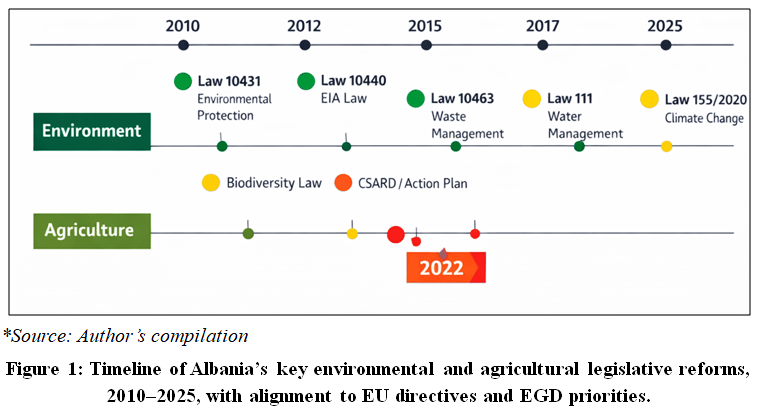 | Figure 1: Timeline of Albania’s key environmental and agricultural legislative reforms, 2010–2025, with alignment to EU directives and EGD priorities.
|
*Source: Author’s compilation
Figure 1 presents a timeline of legislative reforms, highlighting a clear sectoral divergence: environmental legislation demonstrates strong formal alignment, while agricultural instruments exhibit partial alignment and weaker implementation.
Discussion
Challenges in Albania’s Environmental Alignment with the EU
Albania’s progress in aligning with the EU environmental acquis under Chapter 27 remains limited, and in several areas, environmental governance has deteriorated rather than improved. The European Commission’s assessments from 2022 to 2025 consistently highlight a persistent implementation gap: while legislation is increasingly aligned on paper, its enforcement and operationalisation remain weak across most sectors.23-59 This gap reflects deeper structural problems within Albania’s environmental governance framework, including insufficient institutional capacity, chronic underfunding, political interference in environmental permitting, and weak inter-agency coordination.
A key example is the Environmental Impact Assessment (EIA) and Strategic Environmental Assessment (SEA) procedures. Despite alignment with EU directives, EIAs are often of low quality, sometimes approved post-construction, and public participation is largely procedural. Case studies such as the Vlora Airport and Skavica hydropower plant illustrate how political and economic pressures undermine the effectiveness of EIAs.59
Air quality management also demonstrates structural weakness: Albania’s monitoring network remains non-functional, preventing evidence-based policy and compliance with EU directives on volatile organic compounds and petrol-vapour recovery.23-70 Similarly, waste management continues to fall short, with low recycling rates and poorly managed landfills, highlighting the enforcement gap even under formal alignment with EU waste directives.23-59-70 The Tirana incinerator controversy exemplifies governance challenges linked to institutional capacity and potential corruption.
Water governance remains uneven. While five River Basin Management Plans (RBMPs) have been finalised, progress is constrained by financial and human resource limitations, infrastructure deficits, and inadequate stakeholder consultation.71-73.This demonstrates the gap between legal compliance and effective water management.74
Nature protection shows partial regression despite expanded protected areas, with Law No. 21/2024 enabling development in zones requiring strict conservation.75,76Examples include Buna-Velipoja and the Vjosa delta, which are threatened by infrastructure development, illustrating the disconnect between legal obligations and practical protection.77,78
Industrial pollution, chemical management, and noise regulation remain underdeveloped due to early-stage alignment with EU regulations such as REACH, Seveso III, and the Environmental Noise Directive. 20 Institutional constraints limit the ability to monitor and enforce these regulations. While civil protection is comparatively stronger, early warning systems and disaster-risk management require enhancement in the context of climate change.23-79
These findings are consistent with the Europeanisation literature, which suggests that candidate countries often prioritise formal compliance due to external EU conditionality, while lacking the administrative and institutional capacity required for effective implementation. This results in “shallow Europeanisation”, where legal approximation does not translate into behavioural or institutional change.
Overall, Albania’s challenges should be interpreted through the lens of asymmetric Europeanisation and implementation-deficit theory. Formal legal harmonisation has advanced faster than institutional capacity and technical expertise, leading to selective compliance where EU directives are legally transposed but not fully operationalized.39-73-79
Agricultural Policy and Alignment Limitations
Agricultural legislation remains partially aligned with the EU Common Agricultural Policy (CAP) and demonstrates weaker integration of environmental objectives. The Action Plan on the Sustainable Use of Plant Protection Products (2022–2032) represents a step toward sustainability, yet broader agricultural frameworks continue to face implementation challenges in monitoring, farmer engagement, and institutional coordination.25-51
Compared to environmental legislation, agricultural policy demonstrates weaker integration of sustainability principles and limited alignment with EU Common Agricultural Policy instruments. This reflects structural characteristics of the sector, including small-scale farming, fragmented land ownership, and limited extension services, which constrain both policy implementation and monitoring capacity.
These structural constraints are compounded by limited financial resources and weaker institutional coordination, contributing to uneven policy implementation. As a result, agricultural governance remains less responsive to sustainability objectives and less integrated into broader environmental policy frameworks.
The findings therefore indicate a clear sectoral imbalance, where environmental legislation demonstrates higher levels of formal compliance, while agricultural policy lags in both alignment and implementation. This pattern reinforces the selective nature of Europeanisation, where sectors subject to stronger EU conditionality and clearer regulatory frameworks tend to achieve higher levels of formal alignment.
Research Questions: Key Findings
This study addressed its research questions with the following key findings:
Alignment with EU Frameworks
Albania has achieved substantial formal alignment with EU directives and European Green Deal priorities. However, the effectiveness of this alignment in practice remains limited.
Implementation Effectiveness
Significant implementation gaps persist, reflecting institutional weaknesses and governance constraints. This reveals a clear distinction between legal transposition and practical enforcement.
Sectoral Differences
Sectoral variation is evident, with environmental legislation demonstrating stronger alignment and compliance compared to agricultural frameworks. This suggests a pattern of selective or asymmetric Europeanisation.
Conclusion
This study finds that Albania has achieved substantial formal alignment of environmental and agricultural legislation with the EU acquis and the European Green Deal. Key laws covering environmental protection, climate change, waste management, biodiversity, and environmental impact assessment establish a legislative framework broadly consistent with EU standards under Chapters 27 and 11. Strategic frameworks, including the National Adaptation Plan and sectoral policies, further indicate a formal commitment to climate resilience and sustainable resource management.
However, implementation remains constrained by persistent institutional and structural challenges. Weak administrative capacity, fragmented governance, limited financial resources, and insufficient monitoring systems continue to hinder the effective operationalisation of legal provisions, particularly in areas such as waste management, air-quality monitoring, biodiversity protection, and agricultural sustainability.
Sectoral variation is evident, with environmental legislation demonstrating higher levels of alignment and compliance than agricultural frameworks, indicating a pattern of selective or asymmetric Europeanisation. These findings suggest that while legal harmonisation has progressed significantly, the transition from formal compliance to effective implementation remains incomplete. Strengthening institutional capacity, improving inter-agency coordination, and increasing financial investment will be essential for translating legislative commitments into tangible environmental governance outcomes.
The study is based on a qualitative, document-based analysis drawing on legal texts, policy reports, and institutional assessments. These conclusions should be interpreted with caution in the absence of field-based validation. While the analysis of agricultural legislation is comparatively less extensive, it highlights important structural constraints and points to the need for further empirical research in this area.
Overall, the findings contribute to the literature on Europeanisation and implementation deficits by demonstrating how formal alignment can coexist with limited practical effectiveness, particularly in candidate country contexts such as Albania.
Acknowledgement
The author would like to express sincere gratitude to the Agricultural University of Tirana for supporting this research work. The relevant department is highly appreciated for providing the necessary academic environment, laboratory facilities, and technical resources for the successful completion of this study. The author also acknowledges with thanks all institutional support that contributed to the research process.
Funding Sources
The author(s) received no financial support for the research, authorship, and/or publication of this article.
Conflict of Interest
The authors do not have any conflict of interest.
Data Availability Statement
No new data were created or analysed in this study.
Ethics Statement
This research did not involve human participants, animal subjects, or any material that requires ethical approval.
Informed Consent
This study did not involve human participants, and therefore, informed consent was not required.
Permission to reproduce material from other sources
Not Applicable
Author Contributions
Florida Gashi. and JoliaKorita. conceptualized the study, contributed to reviewing and editing the manuscript;
Florida Gashi. conducted the investigation and prepared the original draft; handled data visualisation;
JoliaKorita: provided supervision, project administration, and funding acquisition.
References
- OXFAM. Climate Crisis E-Book. Published, 2022. Accessed: 13 July 2023.https://www.oxfamapps.org.uk/ebook/v3/?tfa_12=23CMOCNA18&pscid=ps_ggl_Fundraising+-+Climate+eBook_Oxfam+Brand+-+Climate+eBook
- Riedy, C. Climate Change. Institute for Sustainable Futures. 2016;3:1–10. Accessed: 18 December 2025. DOI:10.1002/9781405165518.wbeos0737
CrossRef - Royal Society. Climate Change: Evidence & Causes. Published 2020. Accessed: 27 July 2025. https://royalsociety.org/~/media/Royal_Society_Content/policy/projects/climate-evidence-causes/climate-change-evidence-causes.pdf
- Intergovernmental Panel on Climate Change (IPCC). Global warming of 1.5°C: An IPCC Special Report on the impacts of global warming of 1.5°C above pre-industrial levels and related global greenhouse gas emission pathways. Geneva: IPCC. Published 2018.
- Intergovernmental Science-Policy. Platform on Biodiversity and Ecosystem Services (IPBES). Published 2019. Global assessment report on biodiversity and ecosystem services. Bonn: IPBES Secretariat.
- Sandmann, L., Bülbül, E., Castaño-Rosa, R., Hanke, F., Großmann, K., Guyet, R. et al. The European Green Deal and Its Translation into National Strategies: Enablers and Challenges. Sustainable Production and Consumption. 2024;45:123–145. https://doi.org/10.1016/j.erss.2024.103659
CrossRef - Met Office. What is climate change? Published 2020. Accessed April 6, 2023 https://www.metoffice.gov.uk/weather/climate-change/what-is-climate-change
- Copernicus Climate Change Service (C3S) & World Meteorological Organization (WMO). European State of the Climate 2024 (ESOTC 2024). Copernicus Climate Change Service website. Published April 15, 2025. Accessed March 3, 2026. https://climate.copernicus.eu/esotc/2024
- Paris Agreement UNFCCC. Paris Agreement 2015. Accessed: November 27, 2025. https://unfccc.int/process-and-meetings/the-paris-agreement
- UNFCCC Secretariat. Report of the Conference of the Parties on its twenty-first session, held in Paris from 30 November to 13 December 2015. Addendum. Part two: Action taken by the Conference of the Parties at its twenty-first session. (FCCC/CP/2015/10/Add 1) Bonn: United Nations Framework Convention on Climate Change. Published 2016. Accessed: 8 November 2025. https://unfccc.int/documents/9097
- Di Maria, A., Merchán, M., Marchand, M., Eguizabal, D., De Cortázar, M.G., Van Acker, K. Evaluating energy and resource efficiency for recovery of metallurgical residues using environmental and economic analysis. Journal of Cleaner Production, 2022; 356; 131790. doi:10.1016/j.jclepro.
CrossRef - Rivas, S., Urraca, R., Bertoldi, P., Thiel, C. Towards the EU Green Deal: Local key factors to achieve ambitious 2030 climate targets. Journal of Cleaner Production.2021;320:128878. doi:10.1016/j.jclepro.2021.128878.
CrossRef - Özçelik, N., Rey-García, M. & Mato-Santiso, V. Enablers and barriers to European Green Deal implementation: A systematic review and framework proposal. Sustainable Production and Consumption.Published 2025. doi:10.1016/j.spc.2025.10.018.
CrossRef - European Commission. The European Green Deal: Communication from the Commission to the European Parliament, the European Council, the Council, the European Economic and Social Committee, and the Committee of the Regions. Brussels: European Commission. Published 2019. Accessed November 8, 2025. https://eur-lex.europa.eu/legal-content/EN/TXT/?uri=CELEX%3A52019DC0640
- UN General Assembly. Transforming our world: the 2030 Agenda for Sustainable Development (A/RES/70/1). United Nations. Published 2015. Accessed: 8 November 2025. https://sdgs.un.org/2030agenda
- European Commission. The von der Leyen Commission: for a Union that strives for more. Press release, 10 September, Brussels. Published 2019. Accessed November 11, 2025. https://ec.europa.eu/commission/presscorner/detail/en/ip_19_5542
- inalbania.info. Behind Albania’s forest crisis: Governance, economy, and EU accession. Published 2024. Accessed: 25 November 2025. https://www.inalbania.info/behind-albanias-forest-crisis-governance-economy-and-eu-accession/
- OECD. The Climate Action Monitor 2024. Paris: OECD Publishing.
- OECD. Environmental Performance Reviews: Albania. Paris: OECD. Publishing 2022 Accessed November 8, 2025. https://www.oecd.org/albania/environmental-performance-reviews-albania.htm
- Ministry of Tourism and Environment. National Environmental Legislation of Albania. Tirana: 2020. Ministry of Tourism and Environment.
- NAP Global Network. Albania’s National Adaptation Plan: First progress report (2019–2023).https://napgn.org/2023-albania-nap-progress-report.pdf
- United Nations Development Programme. Advancing Albania’s planning for medium and long-term adaptation through the development of a National Adaptation Planning (NAP) process. UNDP Albania. Published 2022. Accessed: 8 November 2025. https://www.undp.org/albania/projects/advancing-albanias-planning-medium-and-long-term-adaptation-through-development-national-adaptation-planning-nap-process
- European Commission. Albania 2024 Report. Directorate-General for Neighbourhood and Enlargement Negotiations. Brussels: European Commission. Accessed November 25, 2025. https://enlargement.ec.europa.eu/albania-report-2024_en
- United Nations Economic Commission for Europe (UNECE). Third Environmental Performance Review: Albania. New York and Geneva: United Nations. Published 2018. Accessed: 8 November 2025. https://unece.org/sites/default/files/2021-08/ECE.CEP_.183_Eng.pdf
- Food and Agriculture Organization of the United Nations (FAO). Evaluation of the Cross-Sectoral Strategy for Agriculture and Rural Development (CSARD 2014–2020): Published 2022 Albania. Rome: FAO.
- World Bank. Albania – Country Climate and Development Report. Published November 25, 2024. Accessed: 25 November 2025.https://www.worldbank.org/en/country/ albania/publication/ albania-country-climate-and-development-report
- European Environment Agency (EEA). The European environment — state and outlook 2020: Published 2019. Knowledge for transition to a sustainable Europe. Copenhagen: European Environment Agency.
- Misho, E. The Evolution of Environmental Legislation in Albania. BNEJSS – Balkan and Near Eastern Journal of Social Sciences, 2019;3(5):12–24. Accessed: 8 November 2025. https://www.ibaness.org/bnejss/2019_05_03/02_Misho.pdf
- UN Framework Convention on Climate Change (UNFCCC). United Nations (United Nations Framework Convention on Climate Change (UNFCCC). Published 1992. Accessed: 27 November 2025. Available at: https://unfccc.int
- Kyoto Protocol UNFCCC. Kyoto Protocol to the United Nations Framework Convention on Climate Change. Published 1997. Accessed November 28, 2025. https://unfccc.int/kyoto_protocol
- Convention on Biological Diversity (CBD). Convention on Biological Diversity. Published 1992. Accessed November 27, 2025. https://www.cbd.int/doc/legal/cbd-en.pdf
- Cartagena Protocol CBD. Cartagena Protocol on Biosafety to the Convention on Biological Diversity.Published2000. Accessed November 27, 2025. https://bch.cbd.int/protocol
- United Nations Economic Commission for Europe. Report of the Forty-Third Session of the Committee on Environmental Policy (CEP). Geneva, Switzerland: United Nations Economic Commission for Europe; 1998. Accessed November 27, 2025 https://unece.org/DAM/env/pp/documents/cep43e.pdf
- Bern Convention, Council of Europe. Convention on the Conservation of European Wildlife and Natural Habitats. Published 1979. Accessed November 27, 2025.https://www.coe.int/en/web/bern-convention
- Basel Convention UNEP. Basel Convention on the Control of Transboundary Movements of Hazardous Wastes and Their Disposal. Published 1989. Accessed November 27, 2025. https://www.basel.int
- Stockholm Convention UNEP (2001) Stockholm Convention on Persistent Organic Pollutants. AccessedNovember 27, 2025.Available at: https://www.pops.int
- Montreal Protocol on Substances that Deplete the Ozone Layer 1522 UNTS 29. 1987. Accessed November 17, 2025.https://treaties.un.org/doc/Publication/ UNTS/Volume% 201522/volume-1522-I-26369-English.pdf
- Vienna Convention UNEP. Vienna Convention for the Protection of the Ozone Layer. Published 1985. Accessed November27, 2025. https://ozone.unep.org
- United Nations Development Programme. National Conference Unveils Eight Local Adaptation Plans for Climate Change. UNDP Albania. Published 2024. Accessed: 8 November 2025. https://www.undp.org/albania/news/national-conference-unveils-eight-local-adaptation-plans-climate-change
- Ministry of Defence of Albania. Official Weather Warning: Heavy Rainfall and Flood Risk, 17–22 November 2025. Tirana: Ministry of Defence.
- RTSH (Radio TelevizioniShqiptar). Paralajmërimpërreshje intensive dherrezikpërmbytjeshnë Shqipëri. Published, 17 November 2025. Accessed November28, 2025. https://rtsh.al
- Copernicus Emergency Management Service (CEMS). Rapid Mapping – Albania Severe Weather and Flood Risk. Published 2025. Accessed November 28, 2025. https://rapidmapping.emergency.copernicus.eu
- European Commission. Albania 2023 Report. Brussels: European Commission. Accessed November 8, 2025. https://ec.europa.eu/neighbourhood-enlargement/countries/detailed-country-information/albania_en
- International Resource Panel (IRP). Global resources outlook 2019: Natural resources for the future we want. Published 2019. Nairobi: United Nations Environment Programme.
- United Nations Economic Commission for Europe (UNECE). About Environmental Policy. Geneva: UNECE. Published 2025. Accessed November8, 2025.https://unece.org/ environmental-policy/ about-environment-policy
- REC Albania. Monitoring of the Climate Change Strategy in Albania 2020–2030 for 2019–2021. Tirana: Regional Environmental Center Albania.Published 2022. AccessedNovember 11,2025. https://recshqiperi.org/2022/01/24/monitoring-of-the-climate-change-strategy-in-albania-2020-2030-for-2019-2021/
- Green Climate Fund. ALBAdapt – Climate Services for a Resilient Albania (Project SAP041). Green Climate Fund: Approved funding proposal. Published 2024
- Republic of Albania. Law No. 10431 dated 9 June 2011 On Environmental Protection. Accessed November 14,2025 https://albcold.gov.al/wp-content/uploads/2021/05/Law-No.-No.10431-On-Enivironmental-Protection.pdf
- Ministry of Agriculture and Rural Development. Annual Environmental Report. Tirana: Republic of Albania. Published 2017
- Ministry of Agriculture and Rural Development, Albania. Complete public consultation report, including annexes. Tirana: Ministry of Agriculture and Rural Development. Published 2017. Accessed November 11, 2025. https://bujqesia.gov.al/wp-content/uploads/2017/12/Complete_Public_Consultation_Report_incl_Annexes-_English_-_June_2017.pdf
- Food and Agriculture Organization of the United Nations / United Nations in Albania (FAO/UN) Advancing sustainable agriculture: Albania’s commitment to sustainable use of plant protection products. Published May 17, 2023. Accessed November 15, 2025 https://albania.un.org/en/232684-fao-advancing-sustainable-agriculture-albanias-commitment-sustainable-use-plant-protection
- European Commission. Directive 2009/128/EC establishing a framework for Community action to achieve the sustainable use of pesticides. Published 2020. Official Journal of the European Union, L 309, 24.11.2009.
- Börzel TA, Risse T. Europeanization: The domestic impact of European Union politics. Annu Rev Polit Sci. 2000;3:1–20. DOI:10.4135/9781848607903.n25
CrossRef - Sedelmeier U. Europeanisation in new member and candidate states. Living Rev Eur Gov. 2011;6(1):1–52. DOI:10.12942/lreg-2011-1
CrossRef - Dhamo, I. & Dhamo, A. Albania and European Integration. Interdisciplinary Journal of Research and Development, 11(S1), pp. 198–208. Published 2024. doi:10.56345/ijrdv11n1s130.
CrossRef - Republic of Albania. Law No. 10440 dated 7 July 2011 On Environmental Impact Assessment. Accessed 14 November 2025.https://financat-lokale.al/sites/default/files/2021-02/Ligji-nr.10440-dt7.7.2011-P%C3%ABr-vler%C3%ABsimin-e-ndikimit-n%C3%AB-mjedis.pdf
- Republic of Albania. Law No. 91/2013 On Strategic Environmental Assessment, amended. Published 2013. Accessed November14, 2025 https://akm.gov.al/wp-content/uploads/2024/02/Ligj-91.2013-PER-VLERESIMIN-STRATEGJIK-MJEDISOR-i-perditesuar.pdf
- Republic of Albania. Law No. 10463 dated 22 September 2011 On Integrated Waste Management, amended. Accessed November 14, 2025,https://faolex.fao.org/docs/pdf/alb113034.pdf
- European Commission. Albania 2022 Report. Directorate-General for Neighbourhood and Enlargement Negotiations. Brussels: European Commission. Accessed November 25, 2025. https://enlargement.ec.europa.eu/albania-report-2022_en
- Republic of Albania. Law No. 81/2017 On Protected Areas, updated with Law No. 21/2024. AccessedNovember 14,2025 https://planifikimi.gov.al/index.php?eID=dumpFile&f=7864&t=f&token=1dd3100d5cbfcf3d815028f38878a1c67cd33155
- Republic of Albania. Law No. 9587 dated 20 July 2006, On the Protection of Biodiversity. Official Gazette of the Republic of Albania. Accessed November13, 2025. https://akm.gov.al
- Mecaj, S. Noise Pollution in Albania Towards European Standards. Perspectives of Law & Public Administration,2019;8(2):181–192.https://www.adjuris.ro/revista/articole/an8nr2/1.%20Mecaj.pdf
- Republic of Albania. Law No. 27/2016 on Chemicals Management. Published 2016. Accessed November 15, 2025. https://mjedisi.gov.al/wp-content/uploads/2018/10/Ligj_27_2016_17.03.2016.doc
- European Parliament and Council. Directive 2008/1/EC of 15 January 2008 on integrated pollution prevention and control. Official Journal of the European Union. 2008 Jan 29;L24:8–29. CELEX: 32008L0001. https://eur-lex.europa.eu/eli/dir/2008/1/oj/eng
- European Parliament and Council. Directive 2001/80/EC of 23 October 2001 on the limitation of emissions of certain pollutants into the air from large combustion plants. Official Journal of the European Union. 2001 Nov 27;L309:1–21. CELEX: 32001L0080. Directive - 2001/80 - EN - EUR-Lex
- European Parliament and Council. Directive 2003/87/EC of 13 October 2003 establishing a scheme for greenhouse gas emission allowance trading within the Community and amending Directive 96/61/EC. Official Journal of the European Union. 2003 Oct 25;L275:32–46. CELEX: 32003L0087. https://eur-lex.europa.eu/legal-content/EN/TXT/?uri=CELEX:32003L0087
- European Parliament and Council. Regulation (EU) No. 525/2013 of 21 May 2013 on a mechanism for monitoring and reporting greenhouse gas emissions and for reporting other climate-related information at national and Union level, repealing Decision No. 280/2004/EC. Official Journal of the European Union. 2013 Jun 18;L165:13–40. CELEX: 32013R0525. eur_20130525_2014-07-17_en.pdf
- Republic of Albania. Law No. 57/2020 On Forests. Published 2020. Accessed November14, 2025. https://turizmi.gov.al/wp-content/uploads/2021/10/Ligji-nr.-57-dt.-30.4.2020-Per-Pyjet-1.pdf
- Republic of Albania. Law No. 9693 dated 19 March 2007. On the Pasture Fund, as amended. Official Gazette of the Republic of Albania. Accessed November 14, 2025 https://qbz.gov.al/eli/ligj/2007/03/19/9693
- European Commission. Commission Staff Working Document – Albania 2025 Report. Brussels: Directorate-General for Neighbourhood and Enlargement Negotiations. Accessed November 15, 2025 https://enlargement.ec.europa.eu/document/download/fe9138b7-90fe-4277-a12c-3a03f6d1957f_en
- European External Action Service (EEAS). Integrated Water Resources Management in Albania, approaching EU standards. Published November 24, 2020. Accessed November 25, 2025. https://www.eeas.europa.eu/delegations/albania/integrated-water-resources-management-albania-approaching-eu-standards_en
- European Parliament. Report on the 2023 and 2024 Commission Reports on Albania. IMMC; Published 2025. Accessed November 25, 2025. https://www.europarl.europa.eu/doceo/document/A-10-2025-0106_EN.html
- World Bank. Better Irrigation Services and Enhanced Water Management in Albania. Published 2023. Accessed November25, 2025. https://www.worldbank.org/en/results/2023/08/22/better-irrigation-services-and-enhanced-water-management-in-albania
- Albanian Water Partnership. EU policy alignment. 2025. Accessed March 3, 2026. https://albanianwaterpartnership.org/en/eu-policy-alignment/
- EcoAlbania. Protected Areas at Risk: Legal Battle in the Constitutional Court. Published, 2025. Accessed November 25, 2025. https://ecoalbania.org/zonat-e-mbrojtura-ne-rrezik-beteja-ligjore-ne-gjykaten-kushtetuese-zerat-e-paleve-ne-seancen-plenare-te-1-korrikut/?lang=en
- International Union for Conservation of Nature. IUCN urges Albania to review the law on Protected Areas. Citizens.al, 3 October 2025. Accessed November 23, 2025 https://citizens.al/en/2025/10/03/iucn-kerkon-qe-shqiperia-te-rishikoje-ligjin-per-zonat-e-mbrojtura/
- Çibuku, A. The government planned the granting of protected areas for strategic investments. Citizens. al, 20 February.Published 2024.Accessed November 27, 2025. https://citizens.al/en/2024/02/20/ligj-i-perkohshem-si-qeveria-e-planifikoi-dhenien-e-zonave-te-mbrojtura-per-investime-strategjike/
- Jordan A, Adelle C, eds. Environmental Policy in the European Union: Actors, Institutions and Processes. 3rd ed. Routledge; 2012.
CrossRef - Energy Community Secretariat. Annual Implementation Report 2024: Albania. Vienna: Energy Community, 2024;14–25.https://www.energy-community.org/dam/jcr%3A44259aae-8662-477e-8c30-e8b0d8978495/EnC_IR2024_1112.pdf
Abbreviations
The following abbreviations are used in this manuscript:
EGD European Green Deal
EU European Union
NAP National Adaptation Plan
EC European Commission
SDGs Sustainable Development Goals
LAPs Local Adaptation Plans
OECD Organisation for Economic Co-operation and Development
UNECE United Nations Economic Commission for Europe
FAO Food and Agriculture Organization
UNDP United Nations Development Programme
DCMs Decisions of the Council of Ministers
CSARD Cross-sectoral Strategy for Agriculture and Rural Development
MRV monitoring, reporting, and learning
GCF Green Climate Fund
NFCS National Framework for Climate ServicesEIA Environmental Impact Assessment
MARD Ministry of Agriculture and Rural Development
SEA Strategic Environmental Assessment
RBMPs River Basin Management Plans
REACH Registration, Evaluation, Authorisation and Restriction of Chemicals