
Development and Optimization of a Process for Removal of Phenolic Compounds from Wheat Straw Hydrolysate
Yaecob Gebre
 , Balwinder Singh Sooch
*
and Ranjeeta Bhari
, Balwinder Singh Sooch
*
and Ranjeeta Bhari
1
Department of Biotechnology and Food Technology,
Punjabi University,
Patiala,
Panjab
India
http://dx.doi.org/10.12944/CWE.21.1.13
Copy the following to cite this article:
Gebre Y, Sooch B. S, Bhari R. Development and Optimization of a Process for Removal of Phenolic Compounds from Wheat Straw Hydrolysate. Curr World Environ 2026;21(1). DOI:http://dx.doi.org/10.12944/CWE.21.1.13
Copy the following to cite this URL:
Gebre Y, Sooch B. S, Bhari R. Development and Optimization of a Process for Removal of Phenolic Compounds from Wheat Straw Hydrolysate. Curr World Environ 2026;21(1).
Download article (pdf)
Citation Manager
Publish History

Introduction
The growing global emphasis on sustainable and eco-friendly technologies has increased awareness of lignocellulosic biomass as a renewable resource for producing value-added biochemicals.1-3 Among the various agricultural residues; wheat straw stands out due to its vast availability, low cost, seasonal renewability, and rich composition of cellulose and hemicellulosic polysaccharides. As a major by-product of cereal cultivation, millions of tons of wheat straw is generated annually, much of which is either left unused or burned in open fields an environmentally harmful practice that contributes to air pollution and greenhouse gas emissions.4 Utilizing wheat straw as a biochemical feedstock therefore not only prevents environmental degradation but also enhances resource efficiency and supports the transition toward greener industrial systems.5 Its high hemicellulose content, particularly the abundance of xylose, makes wheat straw an excellent substrate for bioconversion into fermentable sugars and a diversity of industrially relevant biological products. One of the most commercially important of these is xylitol, a high-value polyol mostly used in food, pharmaceutical, nutraceutical, and dental-care applications due to its low glycemic index, anticariogenic properties, and suitability for diabetic-friendly formulations.6 As global demand for xylitol continues to increase, biotechnological production from lignocellulosic waste has emerged as a sustainable alternative to traditional chemical synthesis. This approach not only reduces reliance on petroleum derived processes but also aligns with principles of circular bioeconomy and agricultural waste valorization.7-9
Pretreatment is a critical initial step in converting wheat straw into a fermentable hydrolysate, as the rigid lignin hemicellulose cellulose matrix limits enzyme and microbial access to carbohydrates.10-12Methods such as dilute-acid, steam explosion, alkaline, and physicochemical pretreatments are commonly applied to disrupt the lignocellulosic structure of wheat straw, and release hemicellulosic sugars, particularly xylose.13-15 However, pretreatment severity strongly influences sugar recovery as well as the formation of inhibitory by-products, which can adversely affect the quality of wheat straw hydrolysate. During pretreatment and hydrolysis, inhibitory compounds such as furfural, hydroxymethylfurfural (HMF), phenolics, and organic acids are generated, thereby necessitating detoxification strategies, including alkaline treatment combined with activated charcoal adsorption, to improve hydrolysate quality.16-18 In this context, treatment parameters such as pH, temperature, and incubation time play a critical role in enhancing phenolic removal efficiency, reducing fermentation inhibitors, and minimizing the loss of fermentable sugars. Optimization of these parameters is therefore essential to improve detoxification performance, increase hydrolysate availability, clarity, and improve the overall physicochemical quality of wheat straw hydrolysate. 19-21
Several detoxification methods, such as alkaline neutralization and activated charcoal treatment, have been reported to reduce these inhibitors; however, many studies focus primarily on individual detoxification approaches rather than evaluating the combined effectiveness of multiple treatments under optimized conditions.22,23 In addition, limited attention has been given to balancing efficient inhibitor removal with minimal loss of fermentable sugars, which is critical for improving hydrolysate quality prior to fermentation. Therefore, there remains a need to systematically evaluate and optimize detoxification strategies for wheat straw hydrolysate to enhance its suitability as a substrate for downstream xylitol fermentation. This integrated approach improves inhibitor removal and detoxification efficiency, thereby strengthening the potential utilization of wheat straw hydrolysate as a value-added substrate within modern biorefinery systems.
Materials and Methods
Raw material collection
Wheat straw was collected from agricultural field near Punjabi University, Patiala India.Freshly harvested wheat straw free from soil, stones, or other contaminants collected from fields was washed to remove dust and impurities and then oven-dried to reduce moisture content, which helps prevent microbial spoilage during storage. Most chemicals, reagents, and laboratory equipment used in the present study were of analytical grade and were obtained from Sigma, Sisco Research Lab (SRL), and SD fine chemicals.
Preparation of wheat straw powder
The dried wheat straw was subsequently ground using a laboratory grinder (Type 530, Model Depose, France) to increase the surface area and enhance the efficiency of subsequent pretreatment, removal of phenolic content and hydrolysis processes for xylitol production. The ground material was then sieved to obtain a uniform particle size suitable for further pretreatment and hydrolysis experiments, and the processed substrate was stored in airtight containers at room temperature until further use. Finely ground, and screened (1-3 mm) to select the fraction was tested for further experiments. 24
Determination moisture content of wheat straw
To determine the moisture content of the sample, the petri dish was first thoroughly cleaned to remove any residues or contaminants, then dried in an oven at 50 °C for 30 minutes, and finally cooled in a desiccator to ensure a moisture-free and stable weighing condition. A 200g portion of the ground sample was then placed into the Petri dish and heated in an oven at a temperature of 70°C for two hours. 25 The sample was then removed from the oven and allowed to cool in the desiccator. It was weighed, and the heating procedure was repeated until the weight remained constant. The initial and final weights of the sample were then used to compute the percentage moisture content on wet and dry basis using the procedure outlined by Yiting et al.26

Where, X = weight of container + sample (g)
Y = weight in of an empty container (g)
G = weight of container + dry sample (g)
wb = wet basis

Where, X = weight of container + wet sample
G = weight of container + dry sample
Y = weight of empty container
db = dry basis
Estimation of total phenolic content determination
The total phenolic content was determined using Folin-Ciocalteu’s method.27The absorbance was then measured at 750 nm using a UV–Vis spectrophotometer. Three independent extractions were performed, and the reagent blank with solvent served as the blank. Gallic acid was used as the standard to plot the calibration curve. The total phenolic content of the hydrolysates was expressed as mg of gallic acid equivalent per 100 g of dry mass.28,29

Where, TPC = the total phenolic content, expressed in (mg/L), C = phenolic concentration from calibration curve (mg/L), V, the volume of the extract (ml), W, the weight of the wheat extract (g). Calibration curve and linear regression is calculated as follows.30
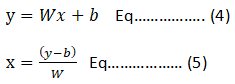
Where, y = absorbance 765 nm, m = slope, x = gallic acid concentration (mg/L), b = intercept.
Analytical Techniques
Estimation of Total sugars
Total sugars of wheat straw were estimated by Anthrone reagent method.31
Reagents: the following reagents were used to estimate the total sugars from wheat straw. 0.2 g of anthrone was dissolved in 100 ml of freshly made, ice-cold 95% H2SO4.After adding 4 ml of anthrone reagent to 1 ml of suitably diluted material, the test tube was placed in a boiling water bath for 10-15 minutes.After cooling to room temperature, the optical density (OD) of the reaction mixture was measured at 630 nm using a spectrophotometer. A standard calibration curve was constructed using sucrose as the reference standard to determine the concentration of total sugars in the wheat straw hydrolysate samples through spectrophotometric analysis.
Estimation of reducing sugars
Reducing sugars of wheat straw were estimated by 3, 5-dinitrosaliclic acid (DNSA) method.32
Reagents: The reagents i.e DNSA solution and sodium potassium tartarate solution, used for estimation of xylose were prepared as follows:
DNSA solution: In 100 ml of 1% (w/v) NaOH solution, 1 g of DNSA and 0.2 g of phenol were dissolved to create the solution. After that, 0.05 g of sodium sulfite was dissolved before usage.
Solution of sodium potassium tartarate: In distilled water, a 40% (w/v) sodium potassium tartarate solution was made.
Procedure: After mixing 3 ml of DNSA solution with 3 ml of a suitably diluted xylose sample (0.5 mg), the mixture was heated for 10–15 minutes in a boiling water bath. It was also mixed with 1 ml of sodium potassium tartarate solution. After cooling to room temperature, the optical density (OD) of the reaction mixture was measured at 575 nm using a spectrophotometer against a reagent blank. A standard calibration curve was constructed using known concentrations as the reference standard, and this curve was subsequently used to estimate the concentration of reducing sugars present in the wheat straw hydrolysate samples.
Pre-treatment of wheat straw by acids hydrolysis
Acid hydrolysis pretreatment of wheat straw is widely applied to enhance its biodegradability by disrupting the lignocellulosic matrix, mainly through the solubilization of hemicellulose and partial breakdown of lignin, which in turn increases cellulose accessibility for downstream conversion processes. The pretreatment is carried out using different acid types at a concentration of (0.5%, v/v)(H2SO4, H3PO4, HCl, and HNO3) under controlled conditions at 121 °C for 30 minutes. The efficiency of this pretreatment is strongly influenced by the optimization of key parameters such aspH, incubation time, and temperature.In addition to hydrolysis, the process involves delignification and the release of phenolic compounds that inhibit subsequent biological processes when not properly managed.Therefore, detoxification steps are often incorporated to remove or reduce inhibitory substances such as phenolic compounds and other degradation products, thereby improving the overall efficiency of enzymatic hydrolysis, fermentation, or anaerobic digestion.33-35
Preparation of wheat straw hydrolysate
Wheat straw hydrolysate (WSH) was prepared following the method described by Wu et al.,36 in which enzyme-free re-hydrolysis of wheat straw residues enhances the overall cellulose hydrolysis yield and improves intracellular product fermentation efficiency. 20 g of dried wheat straw powder (WSP) was mixed inthe mixture of total volume of 100 ml certainly distilled waterand (0.5%, v/v)specified diluteacid, and the solution was kept overnight at room temperature. The acid treatment is applied to the wheat straw to cause the hemicelluloses to disintegrate in to the monomeric components. The mixture was autoclaved at 121 °C under 15 psi pressure for 30 min to accelerate the hydrolytic cleavage of glycosidic bonds, enhance the solubilization of hemicellulosic sugars, and improve the overall fermentability of the resulting wheat straw hydrolysate for subsequent detoxification and downstream fermentation processes.37
After hydrolysis, the mixture was cooled and filtered through muslin cloth followed by Whatman No. 1 filter paper to remove residual solid particles. The obtained hydrolysate was neutralized using calcium hydroxide (1%, w/v) and sodium hydroxide solutions (1%, w/v) to adjust the pH to approximately 10, which facilitated detoxification through precipitation of phenolic compounds derived from lignin degradation and removal of ionic impurities that may inhibit microbial metabolism. The neutralized hydrolysate was re-filtered and further treated with activated charcoal powder (3%, w/v) under continuous stirring to adsorb colored compounds.38The role and mechanism of activated charcoal in removing the inhibitory compounds during the detoxification process are described in detail in Section 2.6
Effect of acid types
To evaluate the effect of different acids on wheat straw hydrolysis, sulfuric acid (H2SO4), hydrochloric acid (HCl), phosphoric acid (H3PO4), and nitric acid (HNO3) were applied at 0.5% (v/v) to prepare the hydrolysate. Hydrolysis was performed by autoclaving the mixture at 121 °C for 30 minutes, aiming to break down hemicellulosic and cellulosic components into fermentable sugars. This step is critical for converting lignocellulosic biomass into a substrate suitable for microbial fermentation, as it facilitates sugar release while partially solubilizing inhibitory compounds. The approach allowed the identification of the optimal acid for producing high-quality hydrolysate, maximizing sugar recovery and minimizing the formation of fermentation inhibitors such as phenolics, furfural, and hydroxymethylfurfural (HMF). By optimizing hydrolysis conditions, the resulting hydrolysate provides a nutrient-rich and low-toxin medium that enhances microbial growth and downstream bioconversion efficiency, supporting the development of a sustainable process for value-added bioproducts.39,40
Detoxification and delignification
The effectiveness of the detoxification and delignification processes was validated by evaluating the reduction of inhibitory compounds and the improvement in fermentable sugar availability in the treated wheat straw hydrolysate. Delignification was verified by the disruption and partial removal of lignin components during dilute acid pretreatment and subsequent processing, resulting in improved accessibility of hemicellulosic fractions and increased release of xylose-rich sugars.41Different detoxification techniques are commonly employed to improve hydrolysate quality. Overliming involves adding calcium hydroxide (5%, w/v) to raise the pH 10, leading to the precipitation of inhibitors, though careful pH control is needed to minimize sugar loss.42The pH of the wheat straw hydrolysate was adjusted after alkaline treatment. Neutralization of the acid-pretreated hydrolysate was carried out by the gradual addition of 2 (%, w/v) NaOH solution with continuous stirring until the desired pH was reached. After treatment, the hydrolysate pH was readjusted, if necessary, to the optimum level required for subsequent microbial fermentation.43
After alkaline neutralization, the hydrolysate was treated with powdered activated charcoal (<100 µm) at 3% (w/v), incubated at 30 °C for 60 minutes under continuous agitation (120 rpm), and subsequently filtered through Whatman paper to obtain a clarified solution. This treatment significantly reduced phenolic compounds, and colored impurities, resulting in improved hydrolysate clarity. Charcoal treatment is widely recognized as an effective detoxification step for lignocellulosic hydrolysates, including wheat straw hydrolysate, facilitating the removal of fermentation inhibitors prior to microbial conversion while minimizing the loss of fermentable sugars.44,45 These success of the treatments was further supported by improved reducing sugar recovery, reduced inhibitor toxicity, and enhanced microbial growth and xylose utilization during fermentation experiments, demonstrating that the treated hydrolysate was suitable for downstream xylitol production. These observations collectively confirmed that the applied detoxification and delignification strategies effectively minimized fermentation inhibitors while preserving fermentable sugars necessary for efficient bioconversion.46,47
Effects of the alkaline treatment
This study evaluates the effectiveness of alkaline pretreatments using 2% (w/v)Sodium hydroxide (NaOH), 5% (w/v)Calcium hydroxide [Ca(OH)2], and 2%(w/v)Ammonia adjusted (NH3) to pH 10 for reducing phenolic content in wheat straw hydrolysate (WSH) during biomass processing at 25 °C for 6 h.48Lignocellulosic substrates are subjected to controlled alkaline pretreatment under optimized conditions of concentration, temperature, and retention time for each aldehyde treatment. Following pretreatment, the treated biomass is washed and neutralized to remove residual alkali and soluble inhibitors. Total phenolic content is quantified using standard analytical methods. The performance of each pretreatment is compared based on phenolic reduction efficiency and sugar concentration. This design enables systematic assessment of the role of different alkaline agents in mitigating phenolic inhibition and improving overall process efficiency.49
Effect of pH
The effect of pH on the detoxification of wheat straw hydrolysate (WSH) was studied by adjusting the pH of hydrolysate to different predetermined levels using appropriate acid or alkaline solutions, while keeping temperature, and incubation time constant. The detoxification process was then carried out under these conditions, followed by separation of the detoxifying agent by filtration. The treated hydrolysate was analyzed for total phenolic content, and fermentable sugars. The impact of pH was evaluated based on the efficiency of inhibitor removal and the extent of sugar retention, allowing identification of the optimal pH for effective detoxification.50
Effect of temperature
The selection of appropriate temperature ranges for removing phenolic compounds from wheat straw hydrolysate is based on the strong influence on detoxification efficiency, sugar preservation, and suitability of the hydrolysate for downstream microbial fermentation.22Temperature plays a critical role because moderate heating enhances the breakdown of lignin carbohydrate complexes and improves the removal of phenolic inhibitors, whereas excessively high temperatures may promote the formation of additional inhibitory compounds such as furfural and hydroxymethylfurfural and lead to degradation of fermentable sugars.51The effect of temperature on the detoxification of WSH was investigated by conducting the detoxification process at different temperatures (20oC, 25oC, 30oC, 35oC, 40oC, and 45 oC) under constant pH and incubation time conditions. The hydrolysate was incubated with the detoxifying agent at the selected temperatures, and after completion of the treatment, the samples were filtered and analyzed. Changes in phenolic content, and sugar levels were used to assess the influence of temperature on detoxification efficiency and stability of fermentable sugars.52
Effect of incubation time
Incubation time determines the extent of contact between detoxifying agents (such as activated charcoal or alkali) and phenolic compounds, allowing sufficient adsorption or chemical interaction for their effective removal.53 However, prolonged incubation beyond the equilibrium period may reduce detoxification efficiency and cause unnecessary sugar loss or secondary inhibitor formation. Therefore, this examination investigates the effect of incubation time on the reduction of phenolic compounds and the preservation of fermentable sugars in wheat straw hydrolysate (WSH) during the detoxification process.54WSH samples are incubated for different time intervals (6, 12, 18, and 24 h) under fixed pH, temperature, and reagent concentration to study the influence of contact time. At the end of each incubation period, the samples are neutralized and filtered to remove solubilized inhibitory compounds. Total phenolic content, as well as total and reducing sugar concentrations, are quantified using standard analytical methods. The effect of incubation time is evaluated based on phenolic removal efficiency, sugar retention, and suitability for downstream fermentation. Therefore, moderate incubation ranges are typically selected to achieve maximum phenolic reduction while maintaining hydrolysate quality, ensuring improved appropriateness for subsequent microbial processing such as xylitol fermentation.55
Statistical analysis
All experimental measurements were recorded in triplicate (n=3), and the mean ± standard deviation (SD) was calculated using Microsoft Excel 2007. The STDEV.S function was applied to each set of replicate values to determine the variability within each treatment. Phenol removal efficiency and sugar retention across different incubation times were compared, and the results were expressed as mean ± SD.56
Results
Estimation of moisture content of wheat straw
The oven-drying method is used to determine a sample's moisture content, showing values calculated on both a wet basis and a dry basis. The content of moisture on a wet basis (7.3%) expresses the amount of water relative to the sample’s total initial weight, whereas moisture content on a dry basis (7.87%) expresses the same moisture amount relative only to the weight of the dry material. Since the dry weight is lower than the wet weight, the percentage value on a dry basis is slightly higher. Both values represent the same moisture level but are calculated using different reference weights.
Pretreatment by acid hydrolysis to prepare wheat straw hydrolysate
Acid hydrolysis is utilized to degrade the complex biomass structural matrix of wheat straw and release pentose and hexose sugars, especially xylose, needed for xylitol production. In this step, wheat straw powder (WSP) is mixed with diluted specified acid (0.5%, v/v) under controlled conditions of temperature, concentration, and time.The acid disrupts hemicellulose and partially cellulose, converting them into soluble sugars that form the hydrolysate. The dark or black color of the hydrolysate indicates the presence of lignin derived compounds, phenolics, and sugar degradation products formed during harsh pretreatment conditions, which act as fermentation inhibitors. The clear or light colored hydrolysate shows effective detoxification and delignification, where these colored inhibitory compounds are removed, resulting in a sugar-rich solution that is more suitable for microbial fermentation and efficient xylitol production. The resulting hydrolysate is filtered and may be detoxified before fermentation.
Effect of different acids
The results shown in Table1 illustrate the effect of different acids on wheat straw hydrolysate, where the phenolic content, total and reducing sugar contents were measured at varying acid concentrations. Different acids were differing considerably in their ability to break down lignocellulosic biomass, and the choice of acid directly influences sugar yield, inhibitor formation, and overall process cost. Optimization of acid type is essential to balance sugar yield with process practicality. Table1 illustrates the comparative efficiency of four acids H2SO4, H3PO4, HCl, and HNO3 in releasing total and reducing sugars from wheat straw. The observed differences in sugar release are attributed to variations in intrinsic acid strength, dissociation behavior, and reactivity toward lignocellulosic biomass, which influence hemicellulose solubilization and cellulose accessibility.
Table 1: Effects of acid type and their concentration on sugar concentration and phenol content (mean ± SD).
Acids | Concentration(%) | Total sugar (TS) (%, w/v) | Reducing sugar (RS) (%, w/v) | Phenolic content (mg/L) |
H2SO4 | 0.5% | 12.0±0.009a | 8.0±0.008a | 0.488±0.005a |
H3PO4 | 0.5% | 5.6±0.007b | 2.8±0.004b | 0.480±0.006b |
HCl | 0.5% | 6.7±0.007c | 3.2±0.006c | 0.490±0.004c |
HNO3 | 0.5% | 8.0±0.008d | 4.0±0.006d | 0.468±0.007d |
Values with different superscript letters differ significantly. SD=standard deviation (n=3).
Among them, H2SO4 demonstrates the highest hydrolytic performance, producing about 12 %, w/v total sugars and 8 %, w/v reducing sugars, indicating strong degradation of hemicellulose and cellulose. The maximum concentrations of total and reducing sugars were observed in the sulphuric acid (H2SO4, 0.5%) treated wheat straw hydrolysate. Therefore, results clearly shows that sulfuric acid is the most effective pretreatment acid for liberating fermentable sugars from wheat straw, and strongly cleaves lignin carbohydrate complexes and promotes lignin depolymerization, releasing more soluble phenolic compounds, followed by nitric acid, while hydrochloric and phosphoric acids perform comparatively lower.
Effect of different alkaline solutions for removal of phenolic content
The sodium hydroxide (NaOH), calcium hydroxide (Ca(OH)2), and ammonia (NH3) was assessed using the same initial phenol content (0.488 mg/L). The results presented in Table 2 show that the highest phenolic content removal was achieved using NaOH, which reduced the phenol concentration to 0.272 mg/L after base treatment and further to 0.126 mg/L following charcoal treatment, corresponding to a 74.1% removal efficiency.
Table 2: Phenolic content in different basic solutions (mean ± SD)
Bases | phenol content (in raw hydrolysate) mg/L | phenol content (in hydrolysate filtrate obtained after base treatment) mg/L | phenol content (in hydrolysate obtained after charcoal treatment) mg/L | % removal of phenol |
NaOH | 0.488±0.005a | 0.272±0.003a | 0.126±0.002a | 74.1% |
Ca(OH)2 | 0.488±0.005a | 0.265±0.003b | 0.201±0.002 b | 58.8% |
NH3 | 0.488±0.005a | 0.276±0.003c | 0.261±0.002 c | 46.5% |
Values are presented as mean ± standard deviation (n = 3).Different superscript letters differ significantly, whereas values with the same superscript letters show no significant difference.
A relatively similar study on the removal of phenol from aqueous solutions using carbon derived from African potato (Hypoxishemerocallidea) waste was reported by Shooto and Thabede.57 In comparison, Ca(OH)2 exhibited moderate performance, lowering the phenol concentration to 0.201 mg/L after charcoal treatment and achieving a 58.8% removal.
NH3 was the least effective, with phenol remaining at 0.261 mg/L and only 46.5% removal. Therefore, NaOH proved to be the most suitable base for detoxification, removing the greatest amount of phenolic inhibitors from the hydrolysate. Different basic solutions vary in how effectively they neutralize or precipitate phenolic compounds present in hydrolysates. Evaluating phenolic content after treatment with different bases helps identify which reagent most efficiently removes these toxic inhibitors. While some bases enhance lignin precipitation, others may reduce phenols more significantly. This comparison is essential for selecting the most suitable detoxification method for producing a cleaner hydrolysate.
Effect of pH in removal of phenol content
The effect of pH on wheat straw hydrolysate was investigated, and the phenolic removal and sugar content were measured at pH values of 8, 10, and 12. The efficiency of phenolic removal largely depends on the pH to which the hydrolysate is adjusted. At pH 10, phenol removal is the maximum at 74.1%, with charcoal reducing phenol to 0.126, and total and reducing sugars reaching their peak values (TS: 12.2%, w/v, RS: 10.6%, w/v). At pH 8, phenol removal is lower (63.5%) and sugar extraction is moderate. At pH 12, although phenol removal is fairly high (46.3%), sugar concentrations drop significantly, likely due to sugar degradation under strongly alkaline conditions.
Table 3: Effects of pH on phenol content and sugar concentration in wheat straw hydrolysate (mean ± SD)
pH | phenol content (in raw hydrolysate) mg/L | phenol content (in hydrolysate filtrate obtained after pH treatment) mg/L | phenol content (in hydrolysate filtrate obtained after charcoal treatment) mg/L | % removal of phenol |
8 | 0.488±0.005a | 0.322±0.003a | 0.178±0.002a | 63.5 % |
10 | 0.488±0.005a | 0.272±0.003b | 0.126±0.002b | 74.1 % |
12 | 0.488±0.005a | 0.456±0.003c | 0.262±0.002c | 46.3 % |
Values are presented as mean ± standard deviation (n = 3). Different superscript letters differ significantly, whereas values with the same superscript letters show no significant difference.
At lower pH, phenolics remain dissolved, while at higher pH, they tend to precipitate out as insoluble complexes. Evaluating different pH values helps identify the optimum range usually around pH 9-11 where phenol precipitation is highest. Too low pH results in poor detoxification, whereas extremely high pH may degrade sugars or introduce new problems like salt accumulation. Determining the ideal pH ensures maximum removal of toxic phenolics while maintaining sugar quality. Thus, pH 10 is optimal, providing maximum phenol removal while preserving the highest sugar yield.
Effects of temperature
Temperature plays an important role in the detoxification and delignification process. The higher temperatures generally enhance the precipitation of phenolic compounds by increasing chemical reactivity and reducing viscosity. The effect of temperature was recorded by heating the wheat straw hydrolysate to accelerate lignin removal and improve the binding of phenolics to detoxifying agents like activated charcoal or lime (Table 4). This result clearly describes the effect of different temperatures(20°C to 45°C) on phenol removal and sugar concentration.
Table 4: The effects of temperature on phenol content and sugar concentration in wheat straw hydrolysate (mean ± SD).
Temperature | phenol content in raw hydrolysate (mg/L) | phenol content in hydrolysate filtrate obtained after temperature treatment (mg/L) | phenol content in hydrolysate obtained after charcoal treatment (mg/L) | % removal of phenol | total sugar (TS) %, w/v |
20°C | 0.488±0.005a | 0.480±0.003a | 0.27±0.002a | 44.6% | 4.2±0.006a |
25 °C | 0.488±0.005a | 0.272±0.003b | 0.126±0.002b | 74.1 % | 8.6±0.007b |
30°C | 0.488±0.005a | 0.268±0.003c | 0.114±0.002c | 76.6% | 12.7±0.009c |
35°C | 0.488±0.005a | 0.269±0.003d | 0.115±0.002d | 75.6% | 12.5±0.009 |
40°C | 0.488±0.005a | 0.38±0.003e | 0.221±0.002e | 53% | 8.1±0.007e |
45°C | 0.488±0.005a | 0.39±0.003f | 0.27±0.002f | 44.7% | 3.3±0.004f |
Values are presented as mean ± standard deviation SD (n = 3). Different superscript letters differ significantly, whereas values with the same superscript letters show no significant difference.
The optimal temperature is 30°C, where phenol removal is highest (76.6%) and sugar levels reach their peak TS: 12.7 (%, w/v), RS: 10.8 (%, w/v). At lower temperatures like 20 °C and 25 °C, detoxification is less efficient, but performance begins improving as temperature increases. At 35°C, phenol removal remains high (75.6%) and sugars stay high, similar to 30°C. At 40°C and 45°C, both phenol removal and sugar concentrations decline, likely due to thermal degradation of sugars and decreased adsorption performance. Overly high temperatures can degrade sugars or stimulate the formation of additional inhibitory compounds, making temperature optimization crucial during detoxification. Evaluating different temperatures helps determine a range that effectively removes inhibitors while maintaining the integrity of fermentable sugars, thereby enhancing the hydrolysates suitability for xylitol fermentation. In this study, 30 °C was recognized as the most effective condition, offering the best balance between detoxification efficiency and sugar preservation.
Effect of incubation time
The effect of incubation time was tested for the removal of phenolic compounds for wheat straw hydrolysate by using the incubation time (6, 12, 18, and 24). The maximum removal of phenolic content was observed after 12 h (Table 5). The 12 h, where phenol removal reaches the highest value of 77.8%.At 18 h, phenol removal drops to 66% and sugars decline sharply, suggesting degradation due to prolonged exposure. At 24 hours, phenol removal decreases further to 47%, and sugar levels become very low.
Table 5: Effect of incubation time on phenol content and sugar concentration in wheat straw hydrolysate (mean ± SD).
Hours | phenol content in raw hydrolysate (mg/L) | phenol content in hydrolysate filtrate obtained after incubation treatment (mg/L) | phenol content in hydrolysate obtained after charcoal treatment (mg/L) | % removal of phenol | total sugar (TS) %, w/v | reducing sugar (RS) %, w/v |
6 | 0.488±0.005 | 0.26±0.003 | 0.114±0.002 | 76.6% | 12.7±0.009 | 10.8±0.008 |
12 | 0.488±0.005 | 0.281±0.003 | 0.108±0.002 | 77.8% | 12.8±0.009 | 10.9±0.008 |
18 | 0.488±0.005 | 0.278±0.003 | 0.165±0.002 | 66.2% | 10.3±0.008 | 9.8±0.008 |
24 | 0.488±0.005 | 0.270±0.003 | 0.260±0.002 | 47% | 9.0±0.008 | 8.7±0.006 |
Values are presented as mean ± standard deviation (SD) (n = 3). Different superscript letters differ significantly, whereas means with the same superscript letters do not differ significantly.
Thus, 12 h is the optimal incubation time, balancing maximum phenol removal and highest sugar recovery. After adding the detoxifying agent and adjusting pH, the mixture is allowed to incubate for a certain period to promote complete precipitation of inhibitors. The current study shows the incubation time influences how thoroughly phenolics, furans, and lignin fragments settle out. Short incubation periods may lead to incomplete detoxification, while excessively long periods may not significantly improve removal and could reduce process efficiency. Evaluating different incubation times helps determine the minimum time required for maximum inhibitor removal without sugar loss, typically ranging from 30 minutes to several hours depending on the method.
Discussion
The presence of phenolic compounds in lignocellulosic hydrolysates represents one of the most significant barriers to efficient microbial fermentation, as these compounds disrupt cellular metabolism through inhibition of key enzymes, alteration of membrane permeability, and induction of oxidative stress within microbial cells. Consequently, effective detoxification of wheat straw hydrolysate is an essential prerequisite for improving its fermentability and enabling its application as a suitable substrate for downstream biotechnological processes such as xylitol production. In the present study, a systematic detoxification strategy was implemented to reduce phenolic inhibitors while maintaining the integrity of fermentable sugars, thereby enhancing the overall quality of the hydrolysate.
Alkaline treatment functioned as an effective primary detoxification step due to its strong ability to disrupt lignin structure and promote solubilization of lignin-derived phenolic compounds. Among the alkaline agents evaluated, NaOH demonstrated superior detoxification performance compared with Ca(OH)2 and NH3. This higher effectiveness can be attributed to its stronger delignification capacity and enhanced ability to cleave within the lignin carbohydrate complex. In addition, hydroxide ions participate in bond cleavage reactions within the lignin matrix, while sodium ions interact with lignin fragments to form soluble sodium phenolate complexes that remain suspended in solution as part of the dark alkaline extract commonly referred to as black liquor. These observations are consistent with earlier studies reporting that strong alkaline pretreatment enhances delignification and improves detoxification efficiency in lignocellulosic hydrolysates.58
Adjustment of pH played a crucial role in improving detoxification efficiency by influencing the ionization state and adsorption behavior of phenolic compounds. Under moderately alkaline conditions, phenolic molecules become increasingly ionized, which enhances their interaction with activated charcoal surfaces and promotes their removal from solution. However, excessively high alkalinity can negatively affect hydrolysate quality by promoting degradation of fermentable sugars and formation of secondary inhibitory compounds. This highlights the importance of maintaining an optimal pH environment that balances efficient inhibitor removal with preservation of carbohydrate fractions essential for fermentation.
Temperature also significantly influenced the detoxification process by affecting adsorption kinetics and chemical stability of hydrolysate components. Moderate temperatures were found to support efficient interaction between activated charcoal and phenolic molecules while maintaining stability of fermentable sugars. In contrast, elevated temperatures may accelerate undesirable side reactions, including thermal degradation of sugars and transformation of phenolic intermediates, which can reduce both detoxification efficiency and substrate quality. These findings emphasize that temperature optimization is necessary to ensure effective removal of inhibitory compounds without compromising fermentable sugar availability.
Incubation time represented another critical factor influencing detoxification performance. Adequate contact time between activated charcoal and hydrolysate components allows sufficient adsorption of phenolic inhibitors, thereby improving hydrolysate clarity and reducing toxicity. However, excessive exposure to alkaline conditions may promote degradation of carbohydrate fractions and facilitate the formation of secondary inhibitory products. Therefore, careful control of incubation duration is essential to achieve an appropriate balance between inhibitor removal and sugar preservation.
The integration of alkaline treatment with activated charcoal adsorption proved particularly effective as a combined detoxification strategy. Alkaline treatment primarily facilitated disruption of lignin structures and release of phenolic compounds into solution, whereas activated charcoal selectively adsorbed the remaining soluble phenolic fractions without causing significant loss of fermentable sugars. This complementary mechanism highlights the advantage of combining chemical and adsorption-based detoxification approaches to improve hydrolysate quality while minimizing substrate loss. Such integrated treatment strategies are especially valuable in lignocellulosicbiorefineries where efficient inhibitor removal must be achieved without compromising downstream fermentation potential.
The present study was focused to reduce phenolic inhibitor content in wheat straw hydrolysate and prepare a detoxified substrate suitable for further experimental investigation. The improved hydrolysate quality obtained through the optimized detoxification process is expected to enhance microbial tolerance to inhibitory compounds, support stable metabolic activity, and improve overall fermentation efficiency during subsequent bioconversion processes. These improvements are particularly relevant for xylitol production, where inhibitor sensitivity of xylose-utilizing microorganisms often represents a major limitation to process performance.
Overall, the findings demonstrate that systematic optimization of detoxification parameters plays a crucial role in maximizing removal of phenolic inhibitors while preserving fermentable sugars required for microbial metabolism. The developed detoxification strategy therefore represents a robust upstream processing approach that supports the efficient utilization of wheat straw hydrolysate as a renewable substrate for value-added biochemical production. Furthermore, incorporation of biological detoxification strategies such as enzyme-assisted treatment or microbial phenolic degradation may further enhance sustainability by reducing reliance on chemical inputs. Future investigations should also explore the use of alternative low-cost adsorbents and regeneration strategies for activated charcoal to improve process economics. In addition, comprehensive fermentation trials using different xylitol-producing microorganisms, combined with real-time inhibitor profiling and process integration analysis, will provide deeper insight into detoxification–fermentation interactions and support development of efficient and sustainable lignocellulosicbiorefinery systems.
Conclusion
The present study demonstrated that phenolic compounds present in wheat straw hydrolysate significantly affect its suitability as a substrate for microbial fermentation and therefore require effective removal prior to bioconversion processes. A systematic detoxification strategy involving alkaline treatment followed by activated charcoal adsorption was successfully applied to reduce phenolic inhibitors while preserving fermentable sugars essential for microbial metabolism. Among the alkaline agents evaluated, NaOH showed superior performance in removing lignin-derived phenolic compounds due to its strong delignification capacity and ability to disrupt lignin–carbohydrate linkages. Optimization of key process variables, including pH, temperature, and incubation time, further enhanced detoxification efficiency by improving adsorption performance of phenolic compounds and minimizing sugar degradation. The integration of alkaline treatment with activated charcoal adsorption conformed particularly effective as a combined detoxification approach, enabling selective removal of inhibitory compounds while maintaining hydrolysate quality.
The optimized detoxification process significantly improved the physicochemical characteristics of wheat straw hydrolysate, making it more suitable for subsequent microbial processing and potential xylitol fermentation applications. These findings highlight the importance of carefully controlling detoxification parameters to achieve an optimal balance between inhibitor removal and preservation of fermentable sugars. Overall, the study provides a practical and efficient upstream detoxification strategy for improving the quality of lignocellulosic hydrolysates and supports the sustainable utilization of wheat straw as a renewable feedstock for value-added biochemical production. Future work should focus on integrating biological detoxification techniques, evaluating alternative low-cost adsorbents, and conducting fermentation studies using xylitol-producing microorganisms to further validate the effectiveness of the optimized hydrolysate in industrial bioprocess applications.
Acknowledgement
I express my deepest gratitude to my supervisors, Prof. Balwinder Singh Sooch and RanjeetaBhari, for their continuous guidance, constructive feedback, and constant support throughout the course of this research. I also thank the faculty and staff of the Department of Biotechnology and Food Technology, Punjabi University, Patiala, for providing the necessary facilities and resources.
Funding Sources
The author(s) received no financial support for the research, authorship, and/or publication of this article.
Conflict of Interest
The authors do not have any conflict of interest.
Data Availability Statement
The data analyzed in this study are available from the corresponding author upon reasonable request.
Ethics Statement
This research did not involve human participants, animal subjects, or any material that requires ethical approval.
Informed Consent Statement
This study did not involve human participants, and therefore, informed consent was not required.
Permission to reproduce material from other sources
Not applicable
Author Contributions
Yaecob Gebre: Collected data, conducted experiments, carried out the analysis and developed the original draft of the research.
Balwinder Singh Sooch: Designed experiments, and proofread the manuscript.
Ranjeeta Bhari: Proofread the manuscript.
References
- Bytyqi H, Mujdeci G.N, Madenli E.C, Ekici E, and Kumar G. Review of lignocellulosic bio-chemical production: Current challenges, advances, and future perspectives. Energy Nexus. 2025; 20: 100543.
CrossRef - Behera D, Behera A.K, Pattnaik S.S, Das N, and Manna S. Sustainable valorization of lignocellulosic biomass into green composites: Recent advances, applications, and future perspectives. Sustain Mater Technol. 2025; 46: e01748.
CrossRef - Bukhari I, Haq F, Kiran M, Aziz T, Mehmood S, and Haroon M. Lignocellulosic biomass as a renewable resource: Driving second-generation biofuel innovation from agricultural waste. Biomass Bioenergy. 2025; 201: 108133.
CrossRef - Saharan B.S, Sharma D, Dhanda D, Sadh P.K, Mandal N.K, Jabborova D, Kumar R, and Duhan J.S. Microbial contributions to sustainable paddy straw utilization for economic gain and environmental conservation. Curr Res MicrobSci 2024; 7: 100264.
CrossRef - Wang S, Yin C, Jiao J, Yang X, Shi B, and Richel A. StrawFeed model: An integrated model of straw feedstock supply chain for bioenergy in China. ResourConservRecycl. 2022; 185: 106439.
CrossRef - Silva T.P, Assis G.C, Santana N.B, Carvalho I.M, Santos P.H, Salay L.C, Iqbal M.W, Bilal M, and Franco M. Chapter 1 - Conversion of lignocellulosic biomass to xylitol and its applications. Valoriz Biomass Bioprod. 2023; 1-26.
CrossRef - Albuquerque T.L, Jr I.J.S, Macedo G.R, and Rocha M.V.P. Biotechnological production of xylitol from lignocellulosic wastes: A review. Process Chem.2014; 49(11): 1779-1789.
CrossRef - Queiroz S.S, Jofre F.M, Mussatto S.I, and Felipe M.G.A. Scaling up xylitol bioproduction: Challenges to achieve a profitable bioprocess. Renew Sustain Energy Rev. 2022; 154: 111789.
CrossRef - Kumari P, Mathur P, Sharma C, and Chaturvedi P. Xylitol production from lignocellulosicbiowastes. BioresourTechnol Rep. 2025; 29: 102025.
CrossRef - Tian S, Zhao R, and Chen Z. Review of the pretreatment and bioconversion of lignocellulosic biomass from wheat straw materials. Renew Sustain Energy Rev. 2018; 91: 483-489.
CrossRef - Rahmani A.M, Gahlot P, Moustakas K, Kazmi A.A, Ojha C.S.P, and Tyagi V.K. Pretreatment methods to enhance solubilization and anaerobic biodegradability of lignocellulosic biomass (wheat straw): Progress and challenges. Fuel. 2022; 319: 123726.
CrossRef - Rusanescu C.O, Ciobanu M, Rusanescu M, and Dinculoiu R.L. Pretreatments applied to wheat straw to obtain bioethanol. Appl. Sci. 2024; 14(4): 1-17.
CrossRef - Khunnonkwao P, Khumrangsee K, Thitiprasert S, Cheirsilp B, Jaiaue P, and Thongchul N. The outlooks and key challenges in renewable biomass feedstock utilization for value-added platform chemical via bioprocesses. Heliyon. 2024; 10(10)1-18.
CrossRef - Javanmard A, Zuki F.M, Daud W.M.A.W, and Patah M.F.A. Torrefied biomass as a platform for sustainable energy and environmental applications: Process optimization, reactor design, and functional material development. Process Saf Environ Prot. 2025; 202: 107643.
CrossRef - Wozniak A, Kuligowski K, Swierczek L, and Cenian A. Review of lignocellulosic biomass pretreatment using physical, thermal and chemical methods for higher yields in bioethanol production. Sustain. 2025; 17(1): 1-33.
CrossRef - Jonsson L.J, and Martín C. Pretreatment of lignocellulose: Formation of inhibitory by-products and strategies for minimizing their effects. Bioresour Technol. 2016; 199: 103-112.
CrossRef - Agrawal R, Verma A, Singhani R.R, Dong C.D, Varjani C, and Patel A.K. Current understanding of the inhibition factors and their mechanism of action for the lignocellulosic biomass hydrolysis. Egypt J Chem. 2021; 332: 125042.
CrossRef - Lyu Q, Dar R.A, Baganz F, Smolinski A, Rasmey A.H.M, Liu R, and Zhang L. Effects of lignocellulosic biomass-derived hydrolysate inhibitors on cell growth and lipid production during microbial fermentation of oleaginous microorganisms: A review. Fermentation. 2025; 11(3): 1-22.
CrossRef - Nazar M, Cheng Y, Tian J, Zhang W, Wang X, Wang S, Xu N, Khan N.A, Liu B, and Ding C. Biological delignification and anaerobic fermentation of wheat straw: A promising approach for sustainable utilization of crop straw Bioresources. Ind Crops Prod. 2025; 227: 120839.
CrossRef - Tenkolu G.A, Kuffi KD, and Gindaba G.T. Optimization of fermentation condition in bioethanol production from waste potato and product characterization. Biomass Convers Biorefin. 2022; 1-19. https://doi.org/10.1007/s13399-022-02974-4.
CrossRef - Daza-Serna L, Masi A, Serna-Loaiza S, Pfnier J, Stark G, Mach R.L, Mach-Aigner A.R, and Friedl A. Detoxification strategy of wheat straw hemicellulosic hydrolysate for cultivating Trichodermareesei: a contribution towards the wheat straw biorefinery. Biomass Convers Biofin. 2023; 13: 16495-16509.
CrossRef - Adebule A.P, Eregie S.B, Sanusi I.A, and Kana G.E.B. Progress in the development of detoxification strategies and the current application of nanoparticles-based detoxification of pretreated lignocellulosic hydrolysate for bioprocessing in a biorefinery scenario. Biomass Bioenerg. 2026;206: 108628.
CrossRef - Jönsson L.J, and Martín C. Pretreatment of lignocellulose: Formation of inhibitory by-products and strategies for minimizing their effects. Bioresour Technol. 2016; 199: 103-112.
CrossRef - Lugani Y, Puri M, and Sooch B.S. Recent insights, applications and prospects of xylose reductase: a futuristic enzyme for xylitol production. Eur Food Res Technol. 2021; 247: 921-946.
CrossRef - Adeyemi M.M, Olatubosun R.S, Babarinde O.A, and Omale P.E. Comparative study of bioethanol production from wheat straw and rice straw. J Chem Sci. 2019; 44 (2): 301-309.
- Yiting Y, Zhou T, Liu T, and Shi W. Quality-based selection of the optimal hot air gradient drying method for anchovy and modeling of drying kinetics. Aquac Fish. 2024; 10(4): 647–655.
CrossRef - Frišcic M, Vilic K, Juric S, Hazler P.K, and Maleš Ž. Total phenolic content, flavonoid content and antioxidant potential of Petasites species from Croatia. Acta Pharm. 2024; 74 (4): 709-723.
CrossRef - Klaif H.F, Nasser J.M, and Shakir K.A. Production of xylose reductase and xylitol by Candida guilliermondii using wheat straw hydrolysates. Iraqi J Agric Sci. 2020; 51(6): 1653-1660.
CrossRef - Permata D.A, Kasim A, Asben A, and Yusniwati K. Delignification of lignocellulosic biomass. World J Adv Res Rev. 2021; 12(02): 462-469.
CrossRef - Obodovych O.M, Fialko N.M, Sablii L.A, Stepanova O.Y, and Tselen B.Y. Intensification of hydrolysis of wheat straw polysaccharides with diluted acids due to new heat and mass transfer equipment. Acta Period Technol. 2025; 56: 461-471.
CrossRef - Hedge J.E, Hofreiter B.T, Whistler R.L, and Miller J.N. In: Carbohydrate chemistry. Academic Press, New York. 1962.
- Miller G.L. Determination of reducing sugar by use of dinitrosalicylic acid reagent. J Anal Chem. 1959; 31(3): 426-428.
CrossRef - Hao J, Chen X, Chen H, Xiong Z, Zhang C, Wang C, Li H, Guo H, Zhang H, Lian X, Yu S, and Chen X. Reducing lignin condensation and enhancing enzymatic hydrolysis of wheat straw by low-concentration p-toluenesulfonic acid pretreatment assisted with polyethylene glycol. ChemEng J. 2025; 511: 162012.
CrossRef - Wozniak A, Kuligowski K, Swierczek L, and Cenian A. Review of lignocellulosic biomass pretreatment using physical, thermal and chemical methods for higher yields in bioethanol production. Sustain. 2025; 17(1): 287.
CrossRef - Su J.Y, An Y.X, Zhao Y, Li L.L, Wang J.Z, Han Y, and Zhang J. Acid-enhanced ternary DES pretreatment of wheat straw guided by Kamlet–Taft parameters: boosting lignin separation and enzymatic hydrolysis. RSC. Advances. 2025; 15: 44410–44422.
CrossRef - Wu S, Li Z, Zhang B, and Bao J. Enzyme-free re-hydrolysis of wheat straw residues upgrades the overall cellulose hydrolysis yield and intracellular products fermentations. Biomass Bioenergy. 2026;205: 108514.
CrossRef - Bulbul A, Delibas A, and Coskun R. Development and characterization of activated charcoal adsorbent derived from oak for efficient removal of methylene blue: Functionality vs surface area. Biomass Convers Biorefin. 2025; 15:23227-23242.
CrossRef - Lanka S, Adivikatla, V.R, Shaik N, Kothagauni S.Y, Panda S.H, Yenumula G.P, and Linga V.R. Studies on different detoxification methods for the acid hydrolysate of Lignocellulosic substrate SaccharumSpontaneum. BiochemMolecu Biology Int. 5(2):53-57.
- Mechnou I, Benabdallah A, Chham A.I, Rachdi Y, Hlaibi M, Elkartouti A, and Saleh N. Activated carbons for effective pharmaceutical adsorption: Impact of feedstock origin, activation agents, and adsorption conditions, and cost analysis. Results Eng. 2025; 27: 105966.
CrossRef - Oriez V, Peydecastaing J, and Pontalier P.Y. Lignocellulosic biomass mild alkaline fractionation and resulting extract purification processes: conditions, yields, and purities. Clean Technol. 2020; 2(1): 91-115.
CrossRef - Hong J.Y, Kim Y.S, and Oh K.K. Fractionation and delignification of empty fruit bunches with low reaction severity for high sugar recovery. Bioresour Technol. 2013; 146: 176-183.
CrossRef - Kubisch C, and Ochsenreither K. Detoxification of a pyrolytic aqueous condensate from wheat straw for utilization as substrate in Aspergillus oryzae DSM 1863 cultivations. Biotechnol Biofuels Bioprod. 2022; 15(8):1-21.
CrossRef - Deb N, Alam M.Z, Rahman T, Al-Khatib M.F.R, Jami M.S, and Mansor M.F.B. Acid-base pretreatment and enzymatic hydrolysis of palm oil mill effluent in a single reactor system for production of fermentable sugars. Int J Polymer Sci. 2023; 1-15.
CrossRef - Bhalodia N, Nariya P, Acharya R, and Shukla V. Evaluation of in vitro antioxidant activity of flowers of Cassia fistula linn. Int J Pharm Techno Res. 2011; 3(1): 589-599.
CrossRef - Shooto N.D, and Thabede P.M. Removal of phenol from an aqueous solution using carbon from African potato (hypoxishemerocallidea) waste. Chemic Thermodyn Thermal Analysis. 2025; 20: 100237.
CrossRef - Vinuthana V.H, Govindaraj O, Uthandi S, Subramaniam S, and Gnanachitra M. Harnessing lignocellulosic biomass: Insights into pre-treatment strategies and hydrolytic enzyme production. Ind Crops Prod. 2025; 229: 120986.
CrossRef - Tamo A.K, Doench I, Deffo G, Jiokeng S.L.Z, Doungmo G, Fotsop C.G, Temgoua R.C.T, Montembault A, Njanja A.E, Serghei I.K.T, andOsorio-Madrazo A. Lignocellulosic biomass and its main structural polymers as sustainable materials for (bio) sensing applications. J Mater Chem. 2025; 13: 24185-24253.
CrossRef - Chong KF, Lu Y, Han Y, Shen Y, Thangalazhy-Gopakumar S, Shi S, andHan L. A Review on the over-liming detoxification of lignocellulosic biomass prehydrolysate for bioethanol production. ApplBiochemBiotechnol. 2025; 197(6):3581-3613.
CrossRef - Zhang X, Zhang Y, Zhang S, Yao L, and Hao Y. Lignocellulosic biomass pyrolysis: A review on the pretreatment and catalysts. Fuel Process Technol. 2025; 279: 108352.
CrossRef - Almajanni Y, Amiri H, and Taheri-Kafrani A. Efficient and cost-effective biodegradation of phenolic compounds in lignocellulosic biomasses using laccase immobilized onto magnetically recoverable nanocellulose-functionalized iron-oxide nanoparticles. Ind Crops Prod. 2025; 223: 120256.
CrossRef - Riaz S, John A.J, Samuel M.S, and Ethiraj S. Recent developments and emerging methodologies in the pre-treatment of lignocellulosic biomass. Sustain Chem Environ. 2025; 11: 100285.
CrossRef - Barten L.M, Crandall J.G, Xie D, Serate J, HandowskiE, Jen A, Overmyer K.A, Coon J.J, Hittinger C.T, Landick R, Zhang Y, and Sato T.K. pH adjustment increases biofuel production from inhibitory switchgrass hydrolysates. Bioresour Technol. 2025; 432: 132651.
CrossRef - Mohan B, Jeppu G, Girish C.R, Manjunath S.V, and Murty V.R. Advances in the preparation of activated carbon derived from agricultural waste as a sustainable solution for wastewater treatment: A comprehensive review. J Hazard Mater Adv. 2026; 22: 101128.
CrossRef - Xue S, Uppugundla N, Bowman M.J, Cavalier D, Sousa L.D.C, Dale C.E, and Balan V. Sugar loss and enzyme inhibition due to oligosaccharide accumulation during high solids-loading enzymatic hydrolysis. Biotechnol Fuel. 2015; 8; 195.
CrossRef - Li G, Zhang J, Cui H, Gao Y, Niu D, and Yin J. Effect of fermentation temperature on the non-volatile components and in vitro hypoglycemic activity of Jinxuan black tea. Frontiers. 2024; 11(6): 1498605.
CrossRef - Nnamani E.A, Helmreich B, Bayode A.A, Alfred M.O, Unuabonah E.I, and Omorogie M.O. Spatiotemporal distribution and risk assessment of bisphenol A and structurally related phenolic compounds in groundwater around the vicinity of municipal dumpsites in Southwestern Nigeria. RSC Adv. 2025; 16:8781-8796.
CrossRef - Shooto N.D, and Thabede P.M. Removal of phenol from an aqueous solution using carbon from African potato (hypoxishemerocallidea) waste. Chemic Thermodyn Thermal Analysis. 2025; 20: 100237.
CrossRef - Farheen V.H, Abdullah M.A, and Moorthy I.G. Lignocellulosic bioethanol production: a review on pretreatment strategies, biofuel separation, and artificial intelligence/machine learning based sustainable optimization. Curr Res Biotechnol. 2026; 11: 100355.
CrossRef